The Best Metal Roofing Company
in Middle Tennessee
Standing seam metal roofing performs differently than any other residential roofing system and installs differently too. Red Rover Roofing builds complete standing seam systems across Middle Tennessee, engineered for this climate’s thermal cycles, storm patterns, and long-term performance demands.
Why Standing Seam Is a Different System, Not Just a Different Material
Most homeowners start considering metal roofing because they want something that lasts longer and handles weather better than traditional shingles. In Middle Tennessee, where heat, humidity, and seasonal storms all accelerate material wear, that’s a reasonable goal. But standing seam isn’t just an upgrade in material, it’s a completely different system that expands, contracts, and moves with the environment in ways asphalt never does.
A dark metal surface in Middle Tennessee can reach extreme temperatures under direct summer sun before an afternoon thunderstorm drops the surface temperature dramatically within minutes. That thermal cycle happens repeatedly throughout the year. A panel that can’t accommodate that movement will stress at its fastening points, bow outward, or develop the kind of noise and waviness that tells you the system is fighting itself rather than working with the structure beneath it.
When installed correctly with concealed floating clip assemblies that allow panels to move freely, standing seam handles those cycles without issue for decades. When fasteners pin panels in place, the metal has nowhere to go and the problems begin.
What Goes Wrong When Standing Seam Is Installed Incorrectly
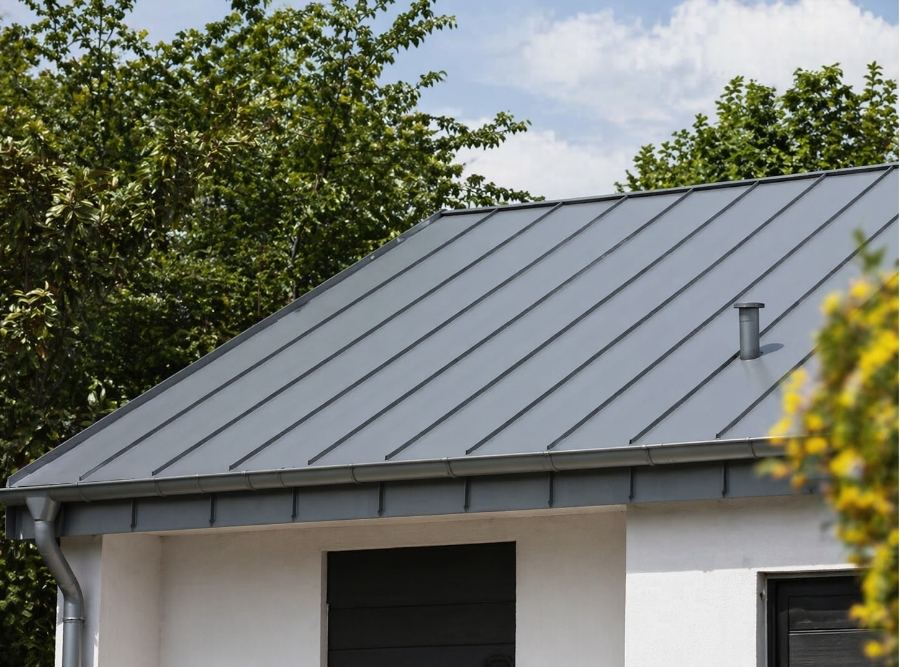
A homeowner came to us after noticing subtle waviness across their metal panels and occasional popping sounds during temperature changes.
From their perspective the material seemed to be failing. Once we evaluated the installation, the issue was the fastening method, panels had been secured in a way that restricted natural movement.
Instead of floating through thermal expansion cycles, the panels were locked in place. The stress showed up as oil canning, the visible surface waviness and the popping sounds came from panels attempting to shift against fixed fastener points. Once the fastening system was corrected to allow controlled movement, both problems stabilized. That’s the distinction between a metal roof that performs quietly for decades and one that draws attention for the wrong reasons within the first few years.
Get a free quote today and experience the difference of expert roofing done right!

“Red Rover Roofing exceeded our expectations from start to finish. Alex was professional, responsive, and incredibly knowledgeable throughout the entire process. He took the time to explain every detail, kept us informed, and delivered high-quality workmanship. The project was completed on time, and the results speak for themselves—our roof looks amazing. If you’re looking for a reliable and honest roofing company in Tennessee, I highly recommend Red Rover Roofing.” – Jessica T.
Roofing
Specialty & Gutters
Storm & Insurance
How We Install Standing Seam Metal Roofing
Structural Evaluation and Layout Planning
Before any panels go down, we evaluate the roof structure, pitch, and layout to determine the correct panel profile, width, and clip system. This includes identifying transitions, valleys, and penetration points where water management is most critical, and confirming that the decking can support the system correctly.
Panel Installation
Panels are installed using concealed fastener clip systems, not exposed through-fasteners that allow each panel to float independently through thermal expansion and contraction. High-temperature butyl underlayment rated for extreme surface heat is installed beneath the panels as a secondary moisture barrier. In urban and dense suburban areas like Green Hills or the Gulch where ambient heat remains elevated longer into the evening, standard underlayments can reach failure temperature, high-temp butyl specification prevents adhesive bleed and maintains the secondary barrier through sustained heat exposure.
Seams are formed to create a continuous interlocking barrier. Custom ridge, hip, and valley components are fabricated to match the system profile. Every transition is treated as a water management detail, not an afterthought.
Verification
After installation we verify panel alignment, seam integrity, and that movement is unrestricted at clip points. Water drainage paths are checked at all transitions. The system is confirmed functional as a complete assembly — not just visually complete on the surface.
Standing Seam and Middle Tennessee’s Climate
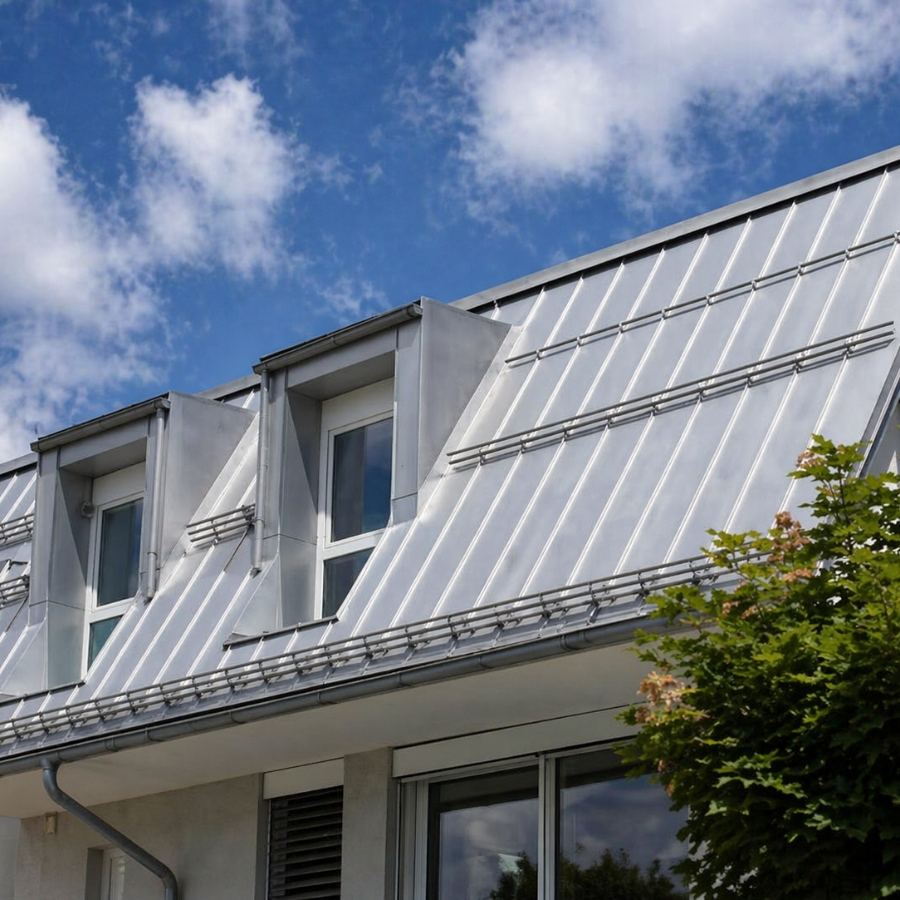
Middle Tennessee creates specific performance demands for metal roofing that don’t apply the same way in other regions.
Thermal cycling. The temperature delta between a metal surface at peak summer heat and the same surface after a sudden afternoon storm is extreme. Panels expand at approximately twice the rate of asphalt — a 40-foot panel can grow by up to half an inch during a standard Tennessee summer day. A floating clip system is not optional here — it’s what prevents fastener slotting, where the metal physically tears away from fixed screws under repeated thermal stress.
Oil canning. Visible waviness in flat metal panels is a direct result of restricted thermal movement. Heavy-gauge 24-ounce steel with properly dimensioned standing seam ribs provides structural rigidity against the solar pumping cycles common in Middle Tennessee’s mid-south climate. Lighter gauge panels without adequate rib depth are more susceptible to oil canning under these conditions regardless of how carefully they’re installed.
Heat island effect on underlayment. In higher-density areas, ambient heat stays elevated longer, keeping roof surface temperatures high well into the evening. Standard underlayments can fail when they reach their maximum service temperature, causing adhesive to bleed. High-temp butyl underlayment rated to 240°C ensures the secondary barrier remains structurally and chemically stable regardless of sustained surface heat.
Red Rover Roofing Serves Middle Tennessee.
Serving homeowners across Williamson, Davidson, Rutherford, Maury counties and beyond.
Antioch, TN
Arrington, TN
Belle Meade, TN
Christiana, TN
College Grove, TN
Columbia, TN
Fairview, TN
Forest Hills, TN
Gallatin, TN
Goodlettsville, TN
Hendersonville, TN
La Vergne, TN
Lewisburg, TN
Mount Juliet, TN
Murfreesboro, TN
Nolensville, TN
Shelbyville, TN
Smyrna, TN
Thompson’s Station, TN
White House, TN
Don’t see your area? We constantly expand our service area to better serve homeowners in Middle Tennessee.
Common Questions About Standing Seam Metal Roofing
How do Middle Tennessee’s temperature swings affect metal roof longevity?
A metal surface in this region can experience extreme heat under direct solar exposure before a sudden temperature drop during an afternoon storm — a cycle that repeats throughout the season. Without a concealed floating clip system, fasteners undergo slotting as the metal physically tears away from fixed screw points under repeated thermal stress. A correctly installed floating system accommodates that movement across the full life of the roof.
Why is oil canning more common in Nashville-area metal installations?
Oil canning is the visible result of restricted thermal movement. Metal expands at approximately twice the rate of asphalt, a 40-foot panel can grow up to half an inch during a standard Tennessee summer day. When panels are pinned rather than floated, the metal bows outward because it has nowhere to go. Heavy-gauge steel with properly dimensioned seam ribs and a floating clip system prevents this across Middle Tennessee’s solar pumping cycles.
Does the heat island effect in Metro Nashville change underlayment requirements?
Yes. In higher-density areas like Green Hills or the Gulch, ambient heat stays trapped longer and keeps roof surface temperatures elevated into the evening. Standard underlayments can reach their maximum service temperature under these conditions, causing adhesive to bleed onto adjacent materials. Our specifications use high-temp butyl underlayment rated to 240°C ensuring the secondary barrier remains intact regardless of sustained heat exposure.
How does standing seam compare to exposed fastener metal roofing?
Standing seam uses concealed clip fasteners that allow panels to float and creates no penetration points through the metal surface. Exposed fastener systems screw directly through the panel those penetrations are sealed with rubber washers that degrade over time in Tennessee’s UV and heat environment. Standing seam eliminates that failure point entirely and accommodates thermal movement in a way exposed fastener systems cannot.
Built to Move, Built to Last
Standing seam metal roofing is one of the longest-lasting systems available but only when the installation accounts for how the material actually behaves in this climate. Thermal movement, oil canning, underlayment performance, and fastener design are not secondary details. They’re what determine whether the roof performs for 40 years or develops problems in the first five.
Red Rover Roofing installs standing seam systems across Middle Tennessee with the panel selection, clip systems, and underlayment specifications this climate requires.
TN #12890 | ★★★★★ | BBB Accredited A− | NRCA Member | Nashville Chamber