The Best Gutter Repair Company
in Middle Tennessee
A gutter that leaks at the same corner repeatedly, sags despite being resealed, or overflows during every heavy rain isn’t just a maintenance problem, it’s a system problem. Red Rover Roofing repairs seamless gutter systems across Middle Tennessee, addressing the actual cause rather than patching the symptom.
When Gutter Repairs Keep Failing at the Same Spot
Most recurring gutter problems in Middle Tennessee trace back to one of three causes: improper pitch, failed sealant chemistry, or hardware that’s no longer holding the system to the fascia. Patching the visible failure without addressing the underlying condition produces the same problem after the next heavy rain.
The most common misdiagnosis is treating a pitch problem as a sealant problem. When water doesn’t move efficiently toward the downspout, it sits in low sections corners and midspan sag points and applies sustained hydrostatic pressure against the joint or sealant. Standard silicone sealants break down under that pressure combined with Middle Tennessee’s UV exposure and temperature cycling. The sealant fails, it’s resealed, and it fails again because standing water is still loading that point every time it rains. Correcting the pitch is what stops the cycle.
What Pitch Problems Look Like in Practice
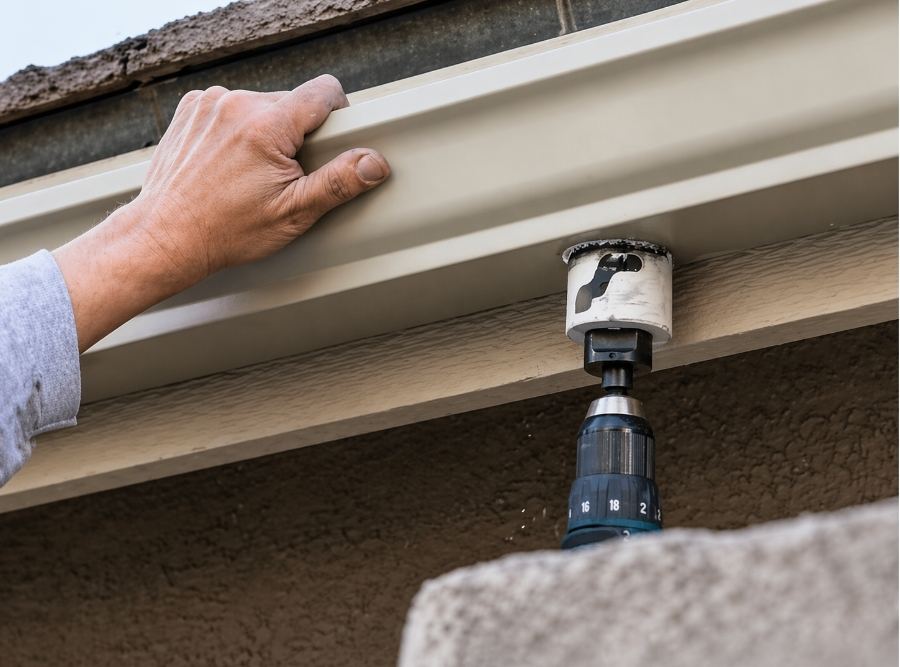
A homeowner had resealed the same leaking corner three times over two seasons.
Each time the repair held briefly, then failed again during the next significant rain. Once we evaluated the full gutter run, the issue was clear, water wasn’t moving toward the downspout efficiently, so it accumulated in that corner under every rainfall event.
The standing water was doing two things: breaking down the sealant through sustained hydrostatic pressure, and adding enough weight over time to slowly pull the gutter away from the fascia. Resealing the corner repeatedly was addressing the symptom while the pitch problem continued generating the cause. After correcting the pitch, replacing the hangers, and resealing the joint with the correct material, the problem stopped recurring. That’s the diagnostic detail that determines whether a gutter repair actually works.
Get a free quote today and experience the difference of expert roofing done right!
“Red Rover Roofing exceeded our expectations from start to finish. Alex was professional, responsive, and incredibly knowledgeable throughout the entire process. He took the time to explain every detail, kept us informed, and delivered high-quality workmanship. The project was completed on time, and the results speak for themselves—our roof looks amazing. If you’re looking for a reliable and honest roofing company in Tennessee, I highly recommend Red Rover Roofing.” – Jessica T.
Roofing
Specialty & Gutters
Storm & Insurance
How We Approach Gutter Repairs
Assessment and Diagnosis
We start by evaluating the full gutter run, not just the visible failure point. That means checking pitch across the entire section, hanger spacing and condition, fascia integrity behind the gutter line, sealant condition at corners and outlets, and how water is actually moving through the system. A corner leak and a downspout overflow look different from the ground but can have the same root cause.
We also distinguish between gutters that are overflowing because they’re undersized versus gutters that are failing mechanically. Water sheeting over the front of a gutter during a Nashville downpour is frequently a downspout capacity issue, water can’t exit the system fast enough and backs up over the edge rather than a broken gutter. That determination affects whether repair is the right scope or whether sizing needs to be addressed alongside it.
The Repair
Pitch correction is handled by adjusting hanger positions to restore the 1/16-inch-per-foot slope required for consistent drainage. On older systems still using spike-and-ferrule hardware, we perform a hardware conversion, removing outdated spikes and replacing them with heavy-duty hidden screw hangers that fasten directly into rafter tails. Spike-and-ferrule systems installed in wood fascia lose their grip as the fascia expands and contracts with Middle Tennessee’s humidity cycling. Screw hangers in rafter tails provide the structural tension needed to hold the system under the weight of burst rainfall events.
Sealant replacement at corners and outlets uses high-polymer tri-polymer sealant, not standard silicone. Standard silicone lacks the elongation needed to accommodate Middle Tennessee’s gutter movement across the full temperature range from winter lows to summer highs. Tri-polymer sealant remains flexible under extreme UV exposure and thermal cycling, which is what allows it to maintain a seal where standard sealants crack and fail within a season or two.
If fascia damage is present — softening, rot, or delamination from prolonged moisture exposure behind the gutter that must be addressed before the gutter can be properly secured. A gutter re-attached to compromised fascia will pull away again regardless of the hardware used.
Verification
After repairs, we verify pitch is correct across the full run, sealant is fully cured and seated at all joints, and the system is secure at every hanger point. Water flow is confirmed toward the downspout without pooling at corners or midspan. The fascia attachment is checked for consistent contact.
Repair vs Replace — How We Determine Which Is Right
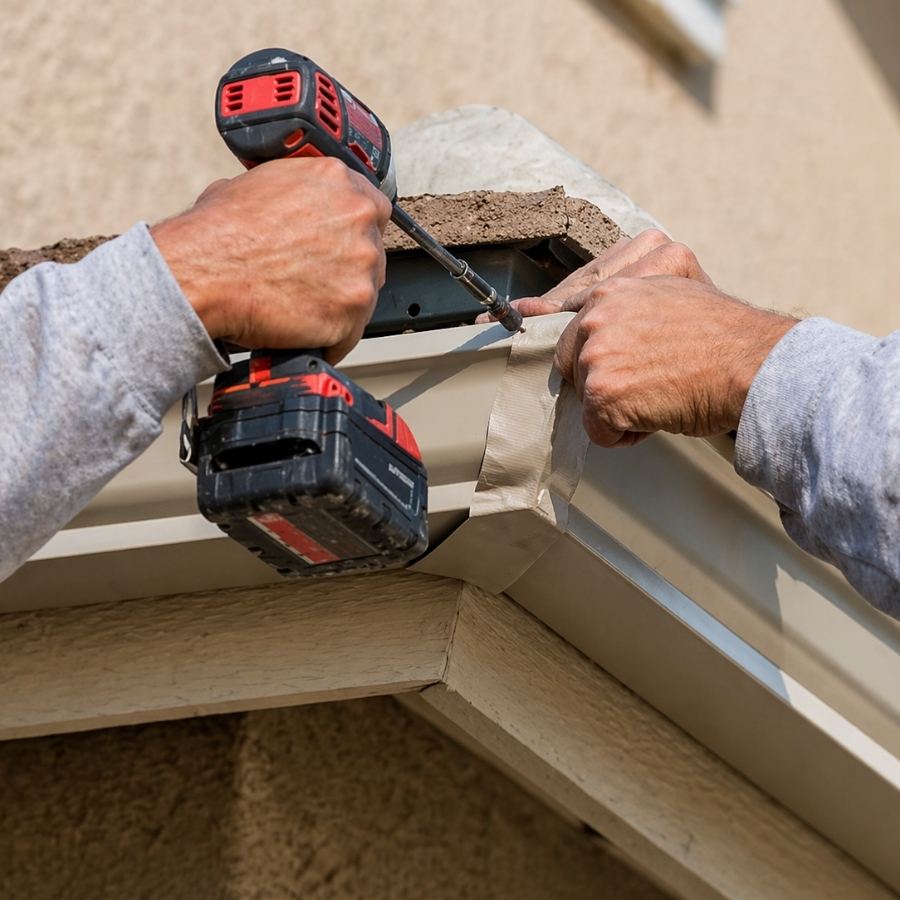
Not every gutter system is worth repairing.
The determining factors are fascia condition, overall system age, and whether the failure is isolated or distributed across multiple sections.
A single sagging section with sound fascia and intact hangers elsewhere is a repair. A system where multiple sections have lost pitch, the fascia shows rot in several locations, and the hardware is original spike-and-ferrule throughout is closer to a replacement, repeated repairs on a system in that condition produce diminishing returns and increasing cost over time.
We make that determination at the assessment stage and explain the reasoning before recommending scope. If repair is the right call, we repair. If replacement is the more practical path, we say so clearly and explain why.
Red Rover Roofing Serves Middle Tennessee.
Serving homeowners across Williamson, Davidson, Rutherford, Maury counties and beyond.
Antioch, TN
Arrington, TN
Belle Meade, TN
Christiana, TN
College Grove, TN
Columbia, TN
Fairview, TN
Forest Hills, TN
Gallatin, TN
Goodlettsville, TN
Hendersonville, TN
La Vergne, TN
Lewisburg, TN
Mount Juliet, TN
Murfreesboro, TN
Nolensville, TN
Shelbyville, TN
Smyrna, TN
Thompson’s Station, TN
White House, TN
Don’t see your area? We constantly expand our service area to better serve homeowners in Middle Tennessee.
Common Questions About Gutter Repair
Why do my gutter corners keep leaking even after I reseal them?
Standard silicone sealants fail in Middle Tennessee because they lack the elongation to survive the region’s thermal cycling. As gutters expand and contract, they pull at mitered corners — brittle sealant cracks under that movement. We use high-polymer tri-polymer sealants that remain flexible under sustained UV exposure and temperature extremes. More importantly, if standing water is loading that corner due to improper pitch, no sealant holds indefinitely — pitch correction is what stops the cycle.
Can gutters that have pulled away from the fascia be repaired, or do they need replacement?
If the fascia is structurally sound, yes, a hardware conversion from spike-and-ferrule to hidden screw hangers fastened into rafter tails restores the holding strength the original system lost. Spike-and-ferrule hardware loses grip as fascia wood expands and contracts with humidity. Screw hangers in rafter tails provide the structural tension needed for long-term stability. If the fascia itself has rotted, that must be addressed before any gutter hardware can hold reliably.
How do I know if my gutter is overflowing because it’s broken or because it’s undersized?
Water sheeting over the front of the gutter during heavy rain is frequently a downspout capacity issue rather than a gutter failure. When downspouts can’t move water out of the system fast enough during a Nashville burst event, water backs up and overflows the front edge. We evaluate the downspout-to-gutter-run ratio at assessment to determine whether the issue is a drainage capacity problem or a mechanical repair, the fix is different for each.
Small Gutter Problems Don’t Stay Small
A leaking corner, a section starting to sag, or overflow during heavy rain are early signals that the system isn’t holding up. Left unaddressed in Middle Tennessee’s storm climate, those issues progress to fascia damage, foundation drainage problems, and eventually a full replacement that a timely repair would have prevented.
Red Rover Roofing identifies what’s actually causing the failure and repairs it correctly the first time.
TN #12890 | ★★★★★ | BBB Accredited A− | NRCA Member | Nashville Chamber