The Best Roof Design Service
in Middle Tennessee
When a roof keeps failing after repairs, the problem usually isn’t the repair. Red Rover Roofing evaluates complete roofing systems across the Greater Nashville Area — ventilation, insulation, airflow, and structure to identify what’s actually causing recurring issues before recommending any work.
When the Problem Isn’t the Roof — It’s the System
A roof that keeps developing problems after correct repairs is telling you something. A leak in a new location a year after the last patch. A second floor that stays hot regardless of HVAC output. Energy bills that climb after a full replacement. Moisture in the attic on a roof that shows no visible failure.
These aren’t bad luck. They’re system signals — symptoms of a roof assembly that was never designed to work correctly, or one where a component has failed in a way that puts compounding stress on everything else. In Middle Tennessee’s climate, where 80%+ humidity, sustained summer heat, and rapid temperature swings all interact with the building envelope simultaneously, those imbalances show up faster and more aggressively than in more temperate regions.
Fixing the symptom without identifying the system condition produces another symptom. A full system evaluation identifies the cause.
Why Some Roofs Keep Having Problems After Repairs
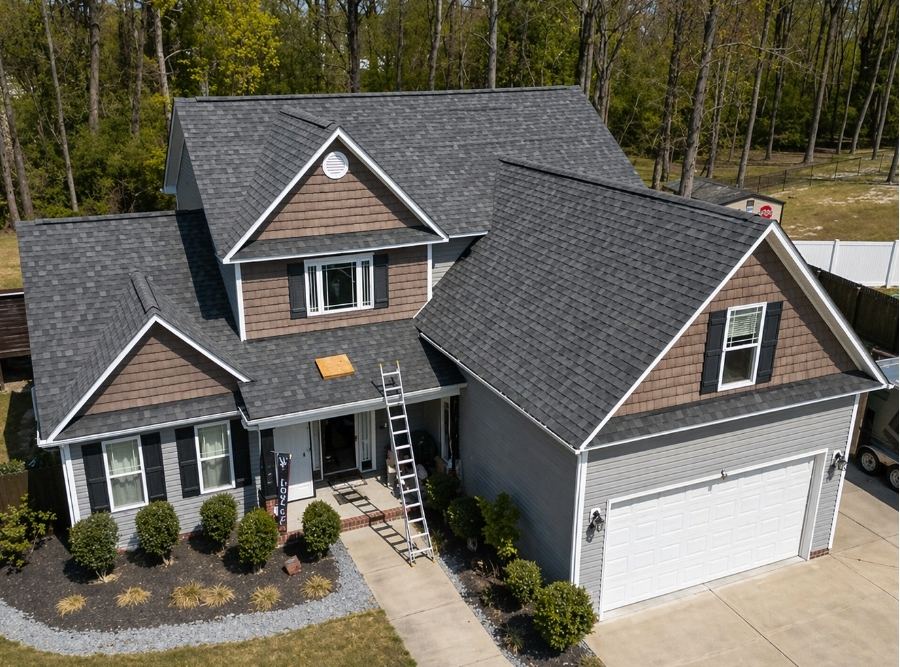
A homeowner came to us after repairing the same general area twice over three years.
Each repair was done correctly on its own terms. Each time, a new issue appeared nearby within eighteen months. Once we evaluated the full system, the pattern made sense. The attic had intake and exhaust vents positioned in a way that created competing airflow rather than the passive sweep — cooler air entering at the soffits and pushing hot humid air out through the ridge — that ventilation design requires. Pockets of trapped heat and moisture were causing materials to expand, contract, and degrade unevenly across the roof.
No individual repair addressed that condition. Once the ventilation was redesigned and balanced, the cycle stopped. That’s what system evaluation reveals: why the roof is behaving the way it is, not just where the current damage is located.
Get a free quote today and experience the difference of expert roofing done right!
“Red Rover Roofing exceeded our expectations from start to finish. Alex was professional, responsive, and incredibly knowledgeable throughout the entire process. He took the time to explain every detail, kept us informed, and delivered high-quality workmanship. The project was completed on time, and the results speak for themselves—our roof looks amazing. If you’re looking for a reliable and honest roofing company in Tennessee, I highly recommend Red Rover Roofing.” – Jessica T.
Roofing
Specialty & Gutters
Storm & Insurance
What a Full System Evaluation Covers
Building Envelope and Attic Assessment
We start inside attic conditions, airflow patterns, insulation levels, moisture indicators, and the relationship between intake and exhaust ventilation. Middle Tennessee’s climate requires a passive sweep that reliably moves air from soffit intake to ridge exhaust. When that flow is blocked, restricted, or short-circuited, the attic becomes a heat and moisture trap that degrades materials from beneath regardless of what’s installed on top.
Net Free Ventilating Area (NFVA) is evaluated against the 1:300 rule, 1 square foot of ventilation for every 300 square feet of attic floor space, balanced equally between intake and exhaust which applies to most modern Middle Tennessee homes with vapor barriers in place. Attic temperatures in Tennessee can reach 150°F under sustained summer conditions without adequate airflow, that heat radiates through the ceiling, drives up HVAC load, and blisters shingles from the underside years before their rated lifespan.
Insulation Performance
Under the 2026 International Energy Conservation Code as adopted locally, residential attics in Middle Tennessee (Climate Zone 4) target R-49 to R-60. Most recurring “winter leak” complaints we evaluate turn out to be internal condensation — warm house air contacting a cold roof deck rather than a roofing failure. Insulation baffles that keep soffit intake vents clear are critical to preventing this. A shingle patch never fixes a condensation problem.
Structural and Material Assessment
Decking condition, fastener integrity, flashing integration, and material compatibility are all evaluated in the context of the full system, not just as isolated components. Thermal shock, the rapid expansion and contraction cycle caused by Middle Tennessee’s temperature swings, causes shingle fasteners to back out over time when the attic environment isn’t stabilized. A designed system that moderates those temperature extremes extends the functional life of every material installed on top of it.
Design Recommendations
The evaluation produces a specific set of findings and recommended corrections, ventilation adjustments, insulation improvements, structural corrections, or material changes with a clear explanation of how each addresses the system condition identified. The recommendations are prioritized by impact, not scope, so you understand what needs to happen first versus what can be monitored.
Signs a System Evaluation Is Warranted
Most system-level issues develop gradually.
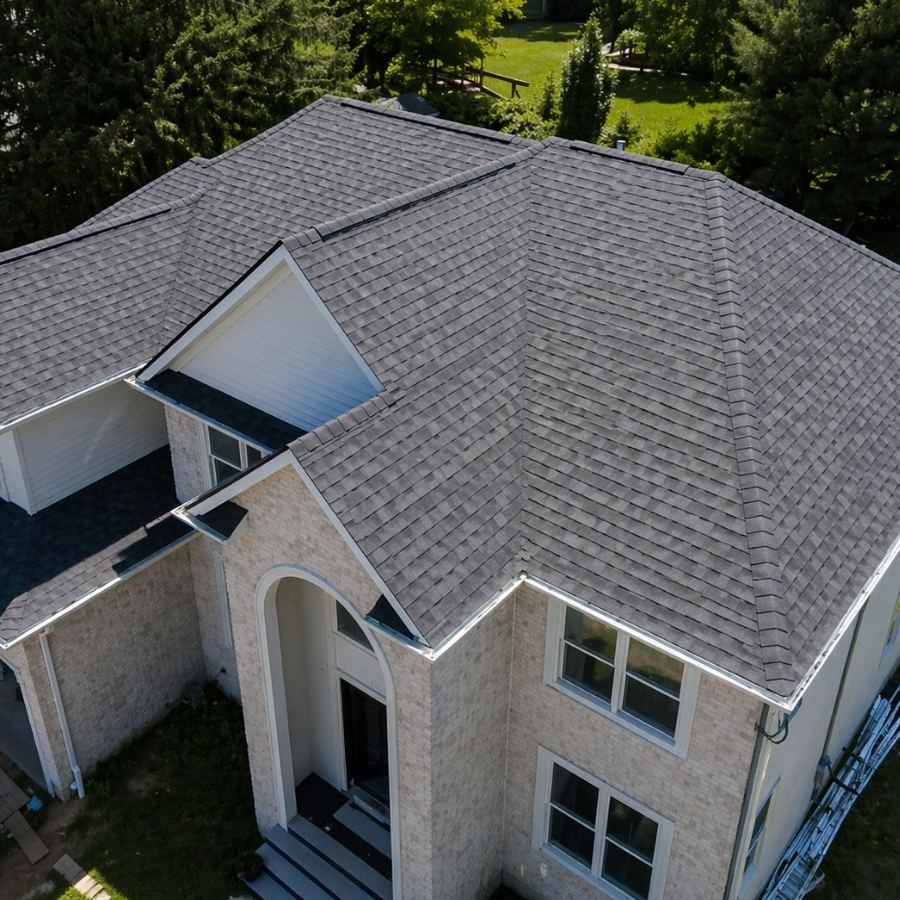
The signals worth paying attention to before a full failure occurs include a second floor that stays disproportionately hot in summer regardless of HVAC output, energy bills that increased after a roof replacement rather than holding steady, moisture or frost in the attic during winter without an active roof leak, recurring repairs in shifting locations rather than the same fixed point, and shingle blistering or granule loss concentrated on one slope while the rest of the roof looks intact.
Any of these individually could have an isolated cause. Multiple of them together almost always point to a system condition rather than a material failure.
Red Rover Roofing Serves Middle Tennessee.
Serving homeowners across Williamson, Davidson, Rutherford, Maury counties and beyond.
Antioch, TN
Arrington, TN
Belle Meade, TN
Christiana, TN
College Grove, TN
Columbia, TN
Fairview, TN
Forest Hills, TN
Gallatin, TN
Goodlettsville, TN
Hendersonville, TN
La Vergne, TN
Lewisburg, TN
Mount Juliet, TN
Murfreesboro, TN
Nolensville, TN
Shelbyville, TN
Smyrna, TN
Thompson’s Station, TN
White House, TN
Don’t see your area? We constantly expand our service area to better serve homeowners in Middle Tennessee.
Common Questions About Roof System Evaluation
Why does my second floor stay hot after a recent roof replacement?
This is the primary symptom of thermal imbalance, a system design failure common in Middle Tennessee’s humidity. New shingles don’t correct ventilation. If the attic isn’t achieving passive sweep, cooler air entering at the soffits pushing hot humid air out through the ridge stagnant heat accumulates and radiates through the ceiling regardless of what material is on the roof. We evaluate NFVA against the 1:300 rule and identify where airflow is being blocked or short-circuited.
Does my home need an insulation upgrade as part of a system evaluation?
Often yes. Under the 2026 IECC as adopted locally, Middle Tennessee attics (Climate Zone 4) target R-49 to R-60. More importantly, insulation baffles that keep soffit intake vents clear are frequently missing or compressed in homes with recurring winter moisture complaints. When warm house air contacts a cold roof deck, condensation forms — a condition that presents identically to a roof leak but can’t be resolved by any roofing repair.
What is thermal shock and how does a designed system address it?
Middle Tennessee experiences rapid temperature swings — a 70°F afternoon dropping to 25°F overnight in shoulder seasons is not unusual. This causes violent expansion and contraction in roofing materials. In an attic with restricted airflow, heat is trapped and those swings are amplified at the roof surface. Over time, shingle fasteners back out under repeated thermal stress. A stabilized attic environment achieved through correctly designed ventilation and insulation — moderates those extremes and extends the functional lifespan of all materials above it.
How is a system evaluation different from a standard roof inspection?
A standard inspection evaluates surface condition — shingle integrity, flashing, visible damage. A system evaluation starts inside the building envelope and works outward, assessing how the full assembly performs as a unit. It’s the appropriate scope when repairs have failed to resolve recurring issues, when performance symptoms suggest something beyond surface damage, or when a replacement is being planned and the underlying system conditions need to be corrected before new materials go down.
Fix the System, Not Just the Symptom
A roof that keeps having problems after correct repairs is not getting worse, it’s telling you the cause hasn’t been identified yet. Continuing to repair symptoms without evaluating the system produces the same cycle at increasing cost.
Red Rover Roofing evaluates complete roof systems across Middle Tennessee. The process starts with understanding how the full assembly is performing before anything is recommended or changed.
TN #12890 | ★★★★★ | BBB Accredited A− | NRCA Member | Nashville Chamber