The Best Attic Ventilation
Service in Middle Tennessee
Poor attic ventilation is the most common cause of premature roof failure in Middle Tennessee and the most commonly overlooked. Red Rover Roofing installs balanced attic ventilation systems across the Greater Nashville Area, designed around the specific heat, humidity, and airflow conditions this climate creates.
When the Attic Can’t Breathe, Everything Above It Pays the Cost
Middle Tennessee’s climate creates conditions that test attic ventilation harder than most regions. Summer days at 90°F or above combined with humidity consistently exceeding 80% produce extreme vapor pressure inside an attic space that isn’t moving air correctly. Unlike climates where overnight temperatures drop enough to allow passive cooling, Nashville and Murfreesboro attics in July and August frequently stay hot through the night effectively baking shingles from the underside continuously rather than only during peak afternoon heat.
The consequences compound. Shingles degrade from beneath before surface wear is visible. Decking holds moisture that leads to rot and delamination. Insulation performance drops as attic temperature rises. Energy costs increase as HVAC works harder against a heat source directly above the conditioned space. And because these problems develop gradually, homeowners typically attribute them to HVAC performance or aging materials rather than the ventilation condition driving them.
Adding vents without understanding the system makes this worse, not better. An attic that appears to have adequate exhaust but blocked or absent soffit intake doesn’t create airflow, it creates negative pressure that pulls conditioned air from the living space below through ceiling penetrations, increasing cooling load rather than reducing it.
What Improper Ventilation Looks Like in Practice
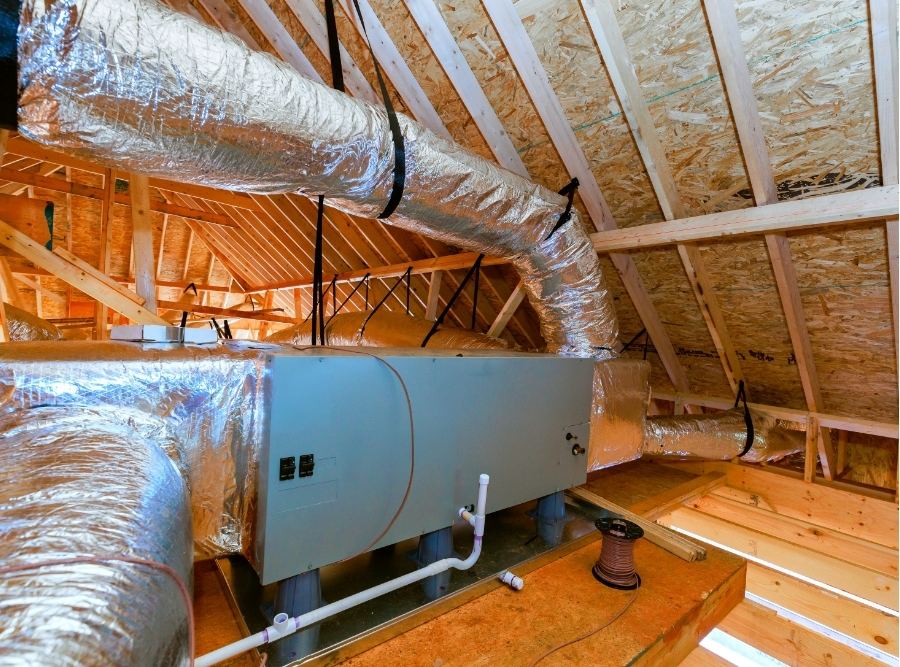
A homeowner was convinced their issue was HVAC-related — the second floor stayed noticeably warmer all summer despite a functioning system.
There was no roof leak, no visible damage, no obvious reason for the problem to be traced to the roof. Once we evaluated the attic, the issue was airflow imbalance. Exhaust vents were present at the ridge, but insulation had compressed and partially blocked the soffit intake points. Without adequate intake, hot air had no efficient path out — the exhaust vents were effectively ventless. Heat was accumulating under the roof deck, accelerating shingle degradation from below and radiating through the ceiling into the living space. Correcting the intake path restored passive sweep and reduced the attic temperature measurably. The HVAC wasn’t the problem. The ventilation was.
Get a free quote today and experience the difference of expert roofing done right!
“Red Rover Roofing exceeded our expectations from start to finish. Alex was professional, responsive, and incredibly knowledgeable throughout the entire process. He took the time to explain every detail, kept us informed, and delivered high-quality workmanship. The project was completed on time, and the results speak for themselves—our roof looks amazing. If you’re looking for a reliable and honest roofing company in Tennessee, I highly recommend Red Rover Roofing.” – Jessica T.
Roofing
Specialty & Gutters
Storm & Insurance
How We Approach Attic Vent Installation
System Assessment
Before installing any vents, we evaluate what the current system is actually doing. That means calculating existing Net Free Ventilating Area against the 1:300 rule, 1 square foot of ventilation for every 300 square feet of attic floor space, split equally between intake and exhaust. This standard applies to most modern Middle Tennessee homes where a vapor barrier is present. We check whether intake and exhaust are balanced, whether soffit vents are open or blocked by insulation, and whether multiple vent types are creating competing airflow rather than working together.
Correct application of the 1:300 ratio — with balanced intake and exhaust rather than all exhaust or all intake is what produces the 40°F attic temperature reduction that meaningful ventilation correction delivers in Middle Tennessee homes.
Vent Selection and Installation
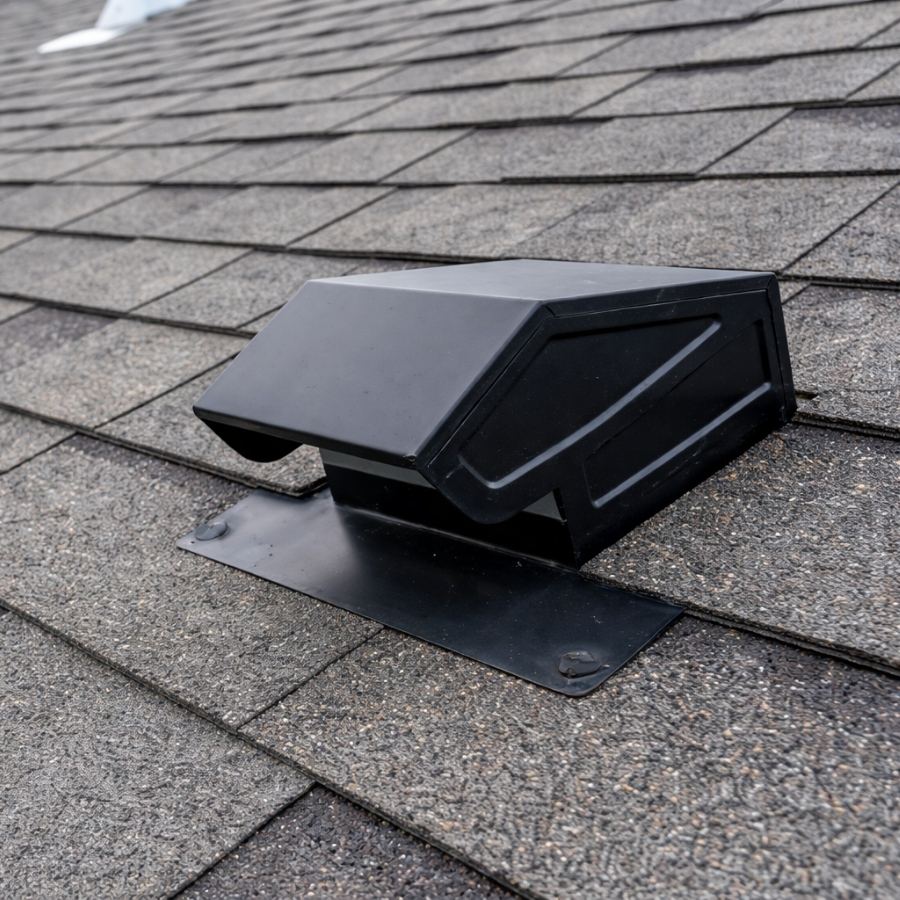
Ridge vent paired with continuous soffit intake is the preferred system under 2026 Tennessee Residential Building Code for most residential applications, it creates continuous passive airflow without moving parts, requires no power, and performs consistently regardless of wind direction. Static vents, box vents, and powered attic fans all have appropriate applications, but mixing exhaust vent types on the same roof creates competing pressure zones that short-circuit airflow rather than improving it.
Soffit vent installation requires confirming that insulation baffles are in place to keep the intake path clear at the eave the most common failure point on homes where additional insulation has been blown in over time. Intake blocked by insulation renders exhaust capacity irrelevant regardless of how much ridge vent is installed.
Verification
After installation, we verify that passive sweep is functioning — cooler air entering at the soffits and moving toward ridge exhaust and that attic temperature and moisture conditions are moving in the right direction. Intake paths are confirmed open. Competing vent types are identified and resolved. The system is confirmed to meet 2026 NFVA requirements before the project is closed.
Why Ventilation Balance Matters More Than Ventilation Volume
The most common ventilation mistake in Middle Tennessee homes isn’t having too few vents, it’s having unbalanced vents.
An attic with adequate ridge exhaust but blocked soffit intake doesn’t move air. It creates negative pressure that draws conditioned air from the living space upward through ceiling penetrations, increasing HVAC load instead of reducing it.
The correct system creates a pressure differential: cooler outside air enters low at the soffits, absorbs heat and moisture as it rises, and exits high through the ridge. That passive thermal stack drives continuous airflow without fans or moving parts. Disrupting either end of that path, blocking intake or adding exhaust-only vents without matching intake breaks the stack and eliminates the benefit.
Under 2026 Tennessee Residential Building Code, new roofs must meet NFVA requirements, and shingle manufacturers including CertainTeed, GAF, and Owens Corning include proper ventilation as a warranty condition. A ventilation failure that causes premature shingle degradation can void the manufacturer warranty on an otherwise properly installed roof.
Red Rover Roofing Serves Middle Tennessee.
Serving homeowners across Williamson, Davidson, Rutherford, Maury counties and beyond.
Antioch, TN
Arrington, TN
Belle Meade, TN
Christiana, TN
College Grove, TN
Columbia, TN
Fairview, TN
Forest Hills, TN
Gallatin, TN
Goodlettsville, TN
Hendersonville, TN
La Vergne, TN
Lewisburg, TN
Mount Juliet, TN
Murfreesboro, TN
Nolensville, TN
Shelbyville, TN
Smyrna, TN
Thompson’s Station, TN
White House, TN
Don’t see your area? We constantly expand our service area to better serve homeowners in Middle Tennessee.
Common Questions About Attic Ventilation
Why is attic ventilation more critical in Middle Tennessee than in other regions?
Middle Tennessee’s combination of 90°F+ summer temperatures and humidity consistently above 80% creates extreme vapor pressure in inadequately ventilated attic spaces. Unlike cooler climates where overnight temperatures provide passive relief, Nashville and Murfreesboro attics frequently hold heat through the night during peak summer — baking shingles from the underside continuously and trapping moisture against the decking. That sustained condition accelerates both surface degradation and structural decay in ways that periodic high-heat exposure in more temperate climates does not.
Will adding more vents lower my energy bills?
Only if the system is properly balanced. Adding exhaust vents without matching intake, or adding any vents to an attic where soffit intake is blocked, creates negative pressure that pulls conditioned air from the living space rather than drawing outside air through the attic. Correct balancing to meet the 1:300 rule with equal intake and exhaust can reduce attic temperatures by up to 40°F, significantly reducing HVAC load during peak Tennessee heat. The improvement requires balanced installation, not simply more vents.
Does 2026 Tennessee Residential Building Code require specific vent types?
The code doesn’t mandate a specific product, but it enforces NFVA requirements and vapor barrier standards. Ridge vent with continuous soffit intake is the preferred system for most residential applications because it provides consistent passive airflow without moving parts. Homes in high-growth areas like Wilson and Williamson Counties that don’t meet current standards may face issues during home inspection, and shingle manufacturers can void warranties on roofs with documented ventilation deficiencies after a heat-related failure.
Can blocked soffit vents cause the problem even if ridge vents are present?
Yes, this is the most common ventilation failure we find in Middle Tennessee homes. When insulation is blown into the attic without baffles maintaining the intake path at the eave, soffit vents become effectively blocked. Ridge vents without functional intake don’t create airflow, they create negative pressure. Correcting intake by installing or clearing baffles and confirming soffit vent function restores the passive sweep the system requires.
Fix the Ventilation Before the Roof Pays for It
An attic that holds heat and moisture in Middle Tennessee’s climate doesn’t just affect comfort, it actively degrades every component of the roof system above it. The correction is straightforward when identified early. Left unaddressed, the cost shows up in premature shingle failure, decking replacement, and voided warranties.
Red Rover Roofing evaluates and installs balanced attic ventilation systems across Middle Tennessee — designed for this climate, built to code, and verified functional before the project closes.
TN #12890 | ★★★★★ | BBB Accredited A− | NRCA Member | Nashville Chamber