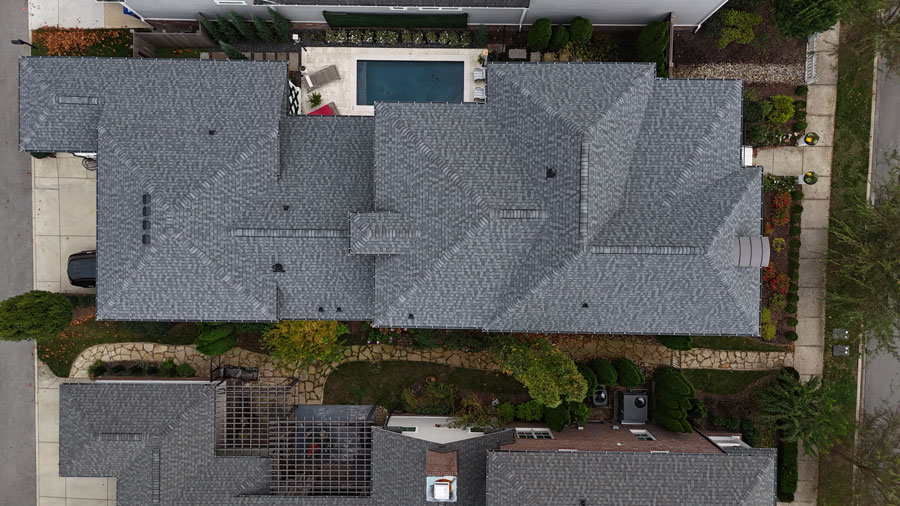
Residential Roof Repair in the Nashville Metro Area
Not every roofing problem requires a full replacement. Targeted repairs address specific issues, extend roof life, and protect the home without unnecessary expense. Red Rover Roofing diagnoses problems accurately and repairs them right.
Request Your Free Roof Consultation
When Repair Is the Right Call
Repair makes sense when the problem is isolated and the surrounding system is still structurally sound. A failed pipe boot, separated flashing, a handful of wind-lifted shingles, or a single compromised valley, these are legitimate repair scenarios that don’t require tearing off the whole roof.
What determines whether repair is the right move isn’t the size of the visible damage. It’s whether the failure is contained or whether it’s a symptom of a system that’s breaking down across multiple areas. A 10-year-old roof with one failed flashing point is a repair. A 20-year-old roof with granule loss across three slopes, soft decking in two corners, and recurring leaks is a replacement that’s been deferred through repeated patching. Getting that diagnosis right at the start saves homeowners from spending repair money on a roof that needed to come off two years ago.
What Accurate Diagnosis Looks Like
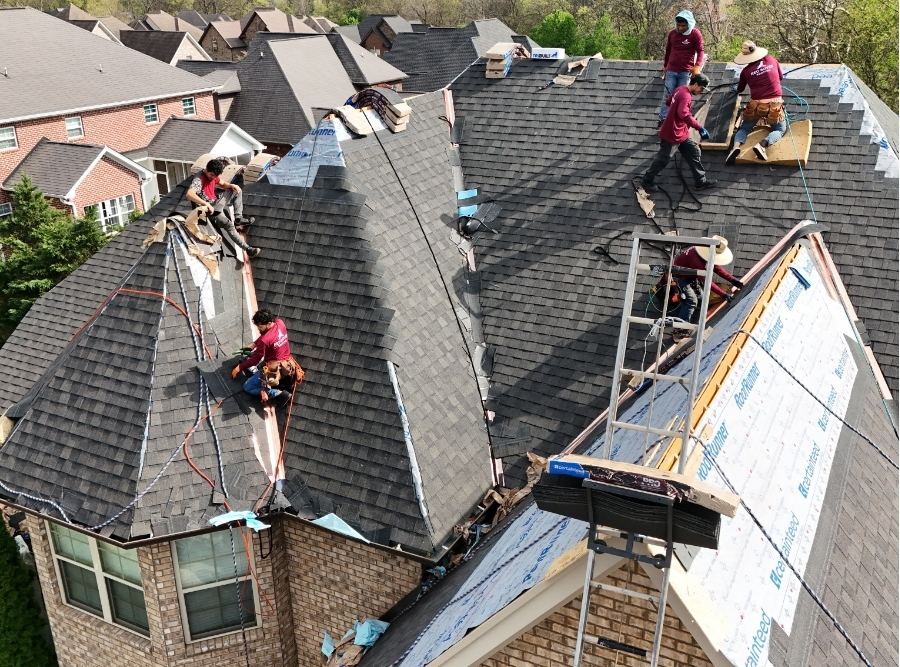
A homeowner recently noticed a water stain forming on their ceiling after heavy rain and assumed the source was directly above it From inside the attic, the issue looked minor — one area, one seal point, quick fix.
The actual source was higher up the roof where flashing had separated near a penetration. Water had been traveling along the decking before pooling and showing up inside, which is why the interior location didn’t match the entry point. That diagnostic detail is what separates a repair that holds from one that gets called back on. Sealing the wrong spot doesn’t resolve the problem, it just delays the next water stain.
Red Rover Roofing Serves Middle Tennessee
Based in Spring Hill and on roofs across Middle Tennessee every week — with same-day response when storms roll through.
Don’t see your area?
We may still serve you — give us a call.
How We Handle Roof Repairs
Inspection and Diagnosis
We start at the top of the roof and work down, not from the stain inward. That means checking shingles, flashing, valleys, pipe boots, and penetrations for failure points along with evaluating decking condition and moisture intrusion in the attic when needed. In Middle Tennessee, storm-related stress is a consistent factor, so we also check for wind-lifted tabs and hail impact that may not be obvious from the ground.
For leak sourcing specifically, we use a top-down diagnostic approach. Water in sloped rooflines rarely travels straight down, it enters at a penetration point, follows a rafter or decking seam, and pools at a low point that may be several feet from where it entered. Tracing that path accurately is what determines whether the repair actually works.
The Repair
Damaged materials are removed and replaced with components that match the existing system as closely as possible. This includes shingle replacement, flashing reinstallation or resealing, pipe boot replacement, and localized decking repair where needed. For shingle matching on roofs 10 years or older, Middle Tennessee’s UV exposure causes natural fading that makes color matching difficult. We use ITEL shingle matching services for insurance-related repairs to identify the closest aesthetic match. If the original material is discontinued, we provide documentation to support line-of-sight matching claims with the carrier.
Under the 2024 IRC as adopted in Tennessee, repairs involving more than one square of roofing or any structural decking work require a permit. Repairs below that threshold typically don’t, but all work is done to current flashing and drip edge standards to keep manufacturer warranties intact.
Verification
After the repair, we confirm the area is sealed correctly and shedding water the way it should. Flashing transitions are checked, surrounding sections are inspected for anything that was missed, and attic conditions are evaluated when moisture intrusion was part of the original complaint. The repair isn’t complete until the system is functioning — not just patched.
What Happens During the Roof Replacement Process?
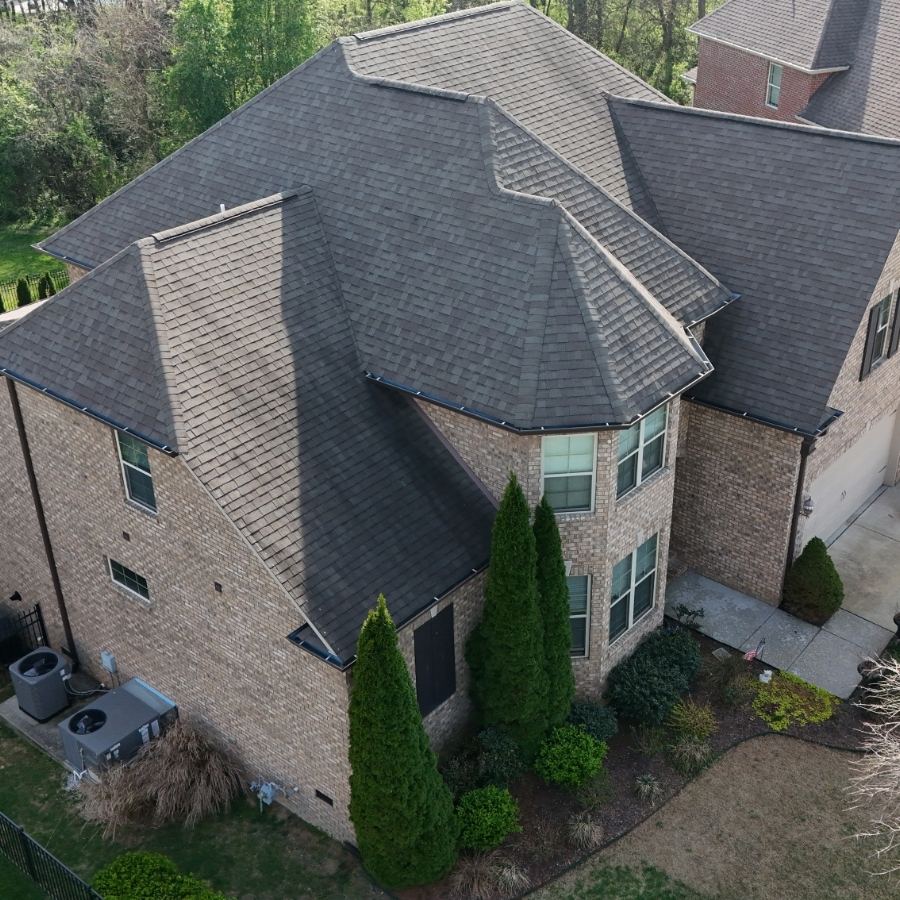
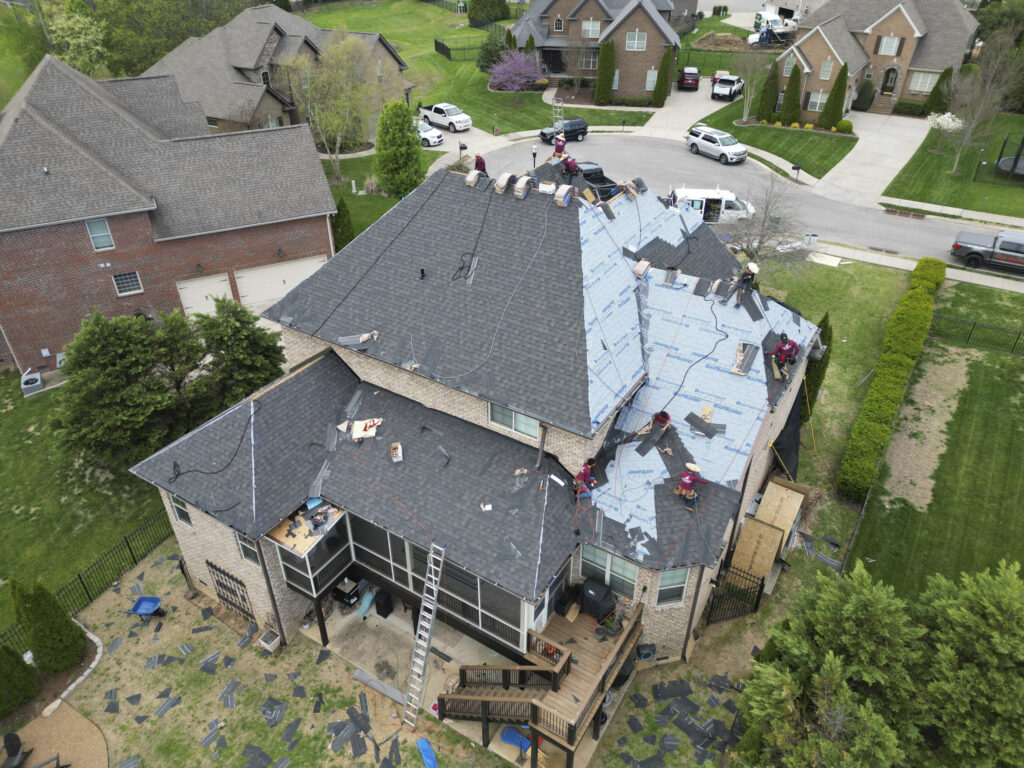
Once you select your materials, we handle the logistics. Red Rover Roofing manages all local permitting required for your project. When tear-off is part of the approved scope, the existing roofing is removed so the underlying deck can be evaluated before the new system is installed. During installation, Red Rover installs the approved roofing system according to applicable requirements for the project.
Our team brings over 10 years of experience to every job, having successfully completed 1,000+ projects. Most homes are completed in one day, followed by a thorough cleanup and final review. Our dedication to quality communication and execution is reflected in our 30+ 5-star reviews.
Red Rover’s Roof Maintenance Program
Repair addresses what’s already failing. Maintenance is what prevents the failure from developing in the first place.
Across Middle Tennessee, roofs deal with a consistent combination of heat, humidity, debris from tree canopy, and storm seasons that create wear patterns that build quietly over time. A debris-packed valley, a cracked pipe boot seal, a gutter holding standing water against the fascia — none of these look urgent until they’ve been sitting long enough to affect adjacent materials.
What a Maintenance Visit Covers
We evaluate the roof as a full system: shingles, ridge cap, flashing, pipe boots, valleys, gutters, downspouts, and ventilation components. The goal is to identify small issues before they require repair — clearing debris from drainage paths, documenting early wear, resealing exposed nail heads on ridge caps, and noting anything that needs closer monitoring.
Maintenance visits also generate the date-stamped photo documentation that CertainTeed, GAF, and Owens Corning warranty language increasingly requires. Most lifetime warranties contain clauses requiring “reasonable maintenance” keeping valleys clear, ensuring pipe boots are sealed and manufacturers are requesting that documentation before honoring premature failure claims. Without it, a $20,000+ roof asset can lose warranty protection on a technicality.
The Roof Tune-Up
A tune-up is distinct from a repair. Where a repair fixes a failure point that already exists, a tune-up addresses the high-wear components before they fail: resealing exposed nail heads on ridge caps, replacing sun-degraded neoprene pipe boots with current-standard bullet boots, clearing debris from dead valleys, and checking flashing seal points at penetrations. The average Middle Tennessee homeowner who skips this work typically encounters $1,500 or more in secondary interior repair costs — drywall, insulation, or ceiling damage from leaks that a tune-up would have prevented.
Gloeocapsa Magma and Roof Lifespan
The black streaking visible on north-facing slopes throughout Middle Tennessee is Gloeocapsa magma — a cyanobacteria that feeds on the limestone filler in asphalt shingles. Left untreated, it creates heat-absorbing surface areas that can raise attic temperatures by up to 15%, accelerating shingle degradation and increasing energy costs. Our maintenance protocol includes a soft-wash biological assessment to stop the decay before it reaches the fiberglass mat beneath the surface layer.
Address It Early
Small roofing problems compound in this climate. Heat, humidity, and storm seasons put consistent pressure on materials, and what’s a minor seal failure in spring becomes a decking repair by fall if it goes unaddressed.
Red Rover Roofing gives you a clear picture of what’s actually happening, whether a repair is the right solution, and what the roof needs to stay ahead of the next problem.
Roof Repair FAQs
The questions homeowners ask us most — answered plainly.
Still have questions?
We’re here to help with any roofing questions you may have.
How do you find a leak that doesn’t appear directly under the water stain?
Water in Middle Tennessee’s sloped rooflines typically enters through a failed penetration point — chimney, vent, or pipe boot then travels down rafters and pools at a low point in the decking. We use a top-down diagnostic approach, inspecting upslope flashing and using moisture detection tools to trace the water path back to its source. Repairing the symptom without finding the source produces a callback.
Can you match shingles on a 10-year-old roof?
Tennessee’s high UV exposure causes natural fading, which makes color matching difficult on older roofs. We use ITEL shingle matching services for insurance-related repairs. If the original material is discontinued, we provide carrier documentation for line-of-sight matching rules so the repair doesn’t visibly degrade curb appeal.
Does skipping maintenance void my shingle warranty?
It can. CertainTeed, GAF, and Owens Corning lifetime warranties include reasonable maintenance clauses, and manufacturers are increasingly requesting maintenance documentation before honoring premature failure claims. An annual maintenance visit with photo documentation protects the warranty on a roof that may represent $20,000 or more in replacement value.
Does a minor repair require a permit in Tennessee?
Replacing a few shingles or a pipe boot generally doesn’t require a permit. Under the 2024 IRC, repairs involving more than one square of roofing or any structural decking work do require a permit and municipal inspection. All Red Rover repairs are done to current flashing and drip edge code standards regardless of permit threshold.
Can Red Rover repair missing shingles or flashing without replacing the whole roof?
Yes. Red Rover Roofing can often replace missing shingles or repair damaged flashing without replacing the entire roof when the damage is limited and the surrounding roofing remains sound. An inspection should also check the underlayment and decking beneath the damaged area for hidden water damage. If leaks are widespread, decking damage is extensive, or the shingles are deteriorating across multiple areas, replacement may be the better long-term solution.
One Contractor. Every Part of Your Roof.
You don’t need multiple contractors. Roofing, storm restoration, gutters, skylights and ventilation — all handled by one local crew.