What Causes Black Streaks on Roofs in Spring Hill, TN?
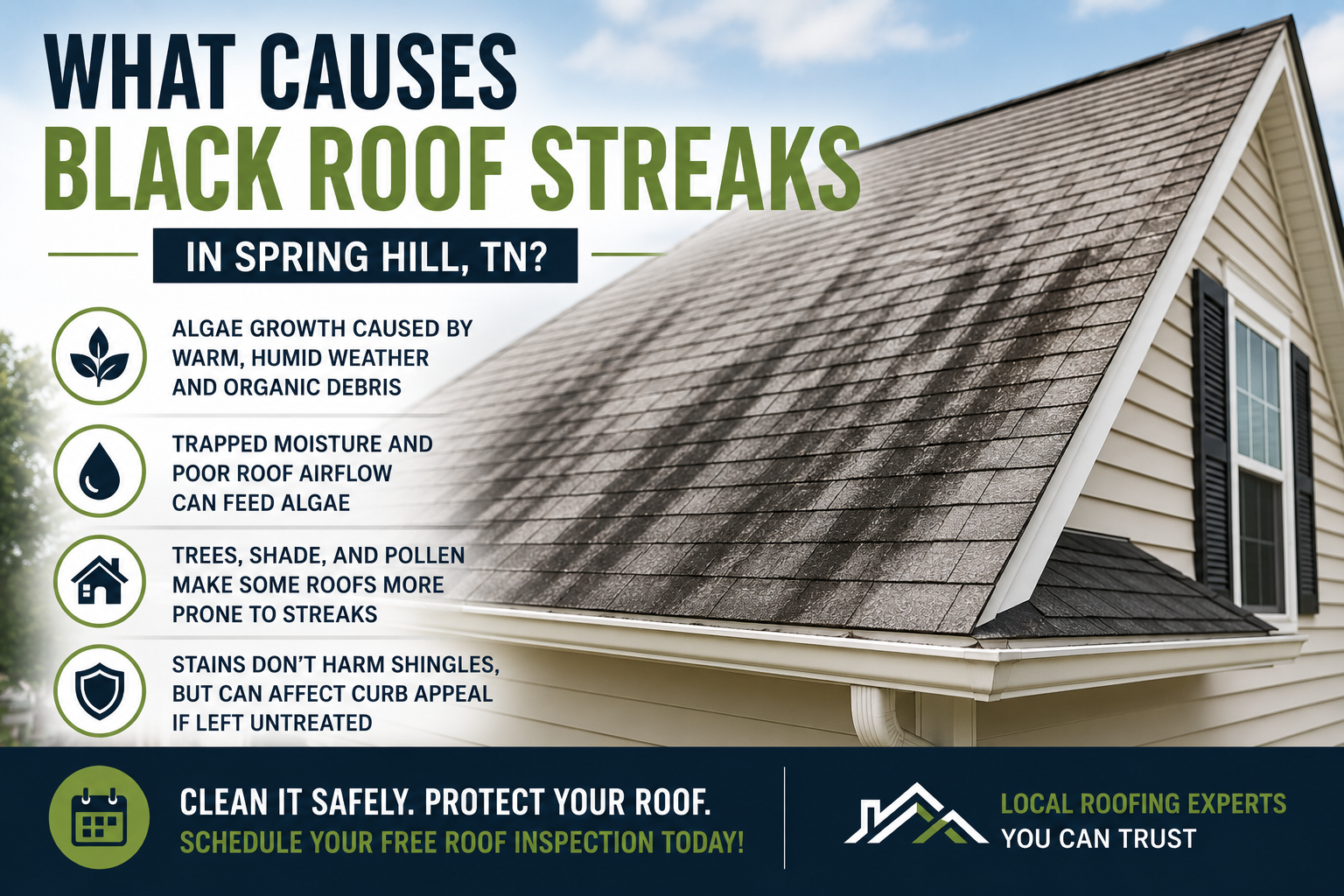
Quick Answer: Black roof streaks are usually caused by airborne algae growing on asphalt shingles. The problem is more common on roof sections that stay damp, receive less sunlight, or sit beneath nearby trees. Spring Hill’s humid weather and regular rainfall can make the staining more noticeable, especially on north-facing slopes.
Are the Black Streaks Dirt, Mold, or Algae?
Most dark roof streaks are not ordinary dirt.
They are usually caused by blue-green algae that spreads across damp shingles. The staining often begins as small dark spots and becomes more visible as rain carries the discoloration down the roof.
Algae, moss, and lichen do not look the same.
Algae usually creates flat black or brown streaks. Moss tends to look green and raised. Lichen often forms crusty patches that cling tightly to the shingles.
That difference matters because moss and lichen may be harder to remove and can be more likely to interfere with the roof surface.
Why Black Streaks Form on Spring Hill Roofs
Algae grows best where moisture remains on the roof long enough for it to spread.
Spring Hill’s warm, humid summers and regular rainfall can leave shaded roof sections damp for longer periods. Morning dew and humid overnight conditions can also slow drying.
The north side of a roof is often affected first because it receives less direct sunlight.
Nearby trees can add to the problem by blocking sunlight and dropping leaves, pollen, seeds, and small branches onto the roof. Debris that collects in valleys or behind vents can trap moisture against the shingles.
Homes with shaded rear slopes, lower garage roofs beside taller walls, or several roof sections meeting together may also have areas that dry more slowly than the rest of the roof.
Homeowners can learn more about Red Rover Roofing’s roofing services for Spring Hill homes.
Why One Roof Slope May Look Worse
It is common for only one side of the roof to have heavy staining.
One slope may sit beneath mature trees while another receives full afternoon sun. A lower roof beside a two-story wall may also remain shaded for much of the day.
Valleys between roof sections can collect leaves and pollen, which slows drying after rain.
These conditions explain why the front of a home may look clean while the rear or north-facing slope develops dark streaks.
Do Black Streaks Mean the Roof Is Leaking?
Not necessarily.
Algae staining alone does not prove that water is entering the home. A roof can have dark streaks and still be watertight.
The problem is that heavy staining can make it harder to judge the condition of the shingles from the ground. Dark areas may hide granule loss, cracked shingles, exposed fasteners, or other wear.
A closer inspection is a good idea when the streaks appear along with missing shingles, moss growth, sagging areas, heavy granule loss, ceiling stains, attic moisture, or debris packed into the valleys.
Red Rover Roofing offers drone-assisted roof inspections for stained or hard-to-reach roof areas.
Can Algae Damage Asphalt Shingles?
Light algae staining is often mainly an appearance issue.
Moss and lichen are usually more concerning because they can grow around or beneath shingle edges and interfere with drainage.
The roof’s age and condition also matter. Cleaning older, brittle shingles may create more risk than cleaning a newer roof that is still in good condition.
Before deciding on cleaning, a roofer should check whether the staining is only on the surface or whether damaged shingles, wet decking, or other concerns are present.
Should You Pressure-Wash Black Roof Streaks?
No. High-pressure washing should not be used on asphalt shingles.
Strong water pressure can loosen protective granules, damage shingle edges, force water beneath the roof covering, and shorten the life of the roof.
Walking on a wet or stained roof is also dangerous.
A safer cleaning method usually uses an approved solution applied at low pressure. The right process depends on the roofing material, the age of the shingles, the amount of growth, and the manufacturer’s instructions.
Do not assume that any outdoor cleaner is safe for a roof. Some products can discolor shingles, damage metal components, or harm nearby plants.
Will the Streaks Come Back?
They can.
Cleaning removes the visible staining, but airborne algae may return over time, especially on shaded slopes that stay damp.
Keeping gutters and valleys clear can help water leave the roof faster. Trimming branches away from the roof may also improve sunlight and airflow when it can be done safely.
Some shingles include algae-resistant features that help slow future discoloration. They can reduce staining, but they do not guarantee that a roof will remain permanently clean.
Regular roof maintenance and preventive inspections can help identify debris buildup, drainage problems, and new biological growth before it becomes severe.
Is Cleaning Enough, or Does the Roof Need Repair?
Cleaning may be enough when the shingles are secure and the streaks are limited to surface algae.
A roof repair may be needed if the stained area also contains cracked shingles, failed flashing, loose pipe boots, wet decking, or other damage.
Replacement may be worth discussing when the roof has widespread wear, brittle shingles, repeated repairs, or heavy granule loss.
The decision should be based on the condition of the roof rather than the color of the streaks alone.
Frequently Asked Questions
Schedule a Roof Inspection in Spring Hill, TN
Black streaks do not automatically mean the roof is failing, but they should not be cleaned without first understanding the roof’s condition.
Schedule a roof inspection with Red Rover Roofing to confirm whether the streaks are surface algae or whether the shingles need maintenance or repair. You will receive photos and a clear explanation of what was found.