
Can Clogged Gutters Cause Roof Leaks or Roof Damage in Spring Hill, TN?
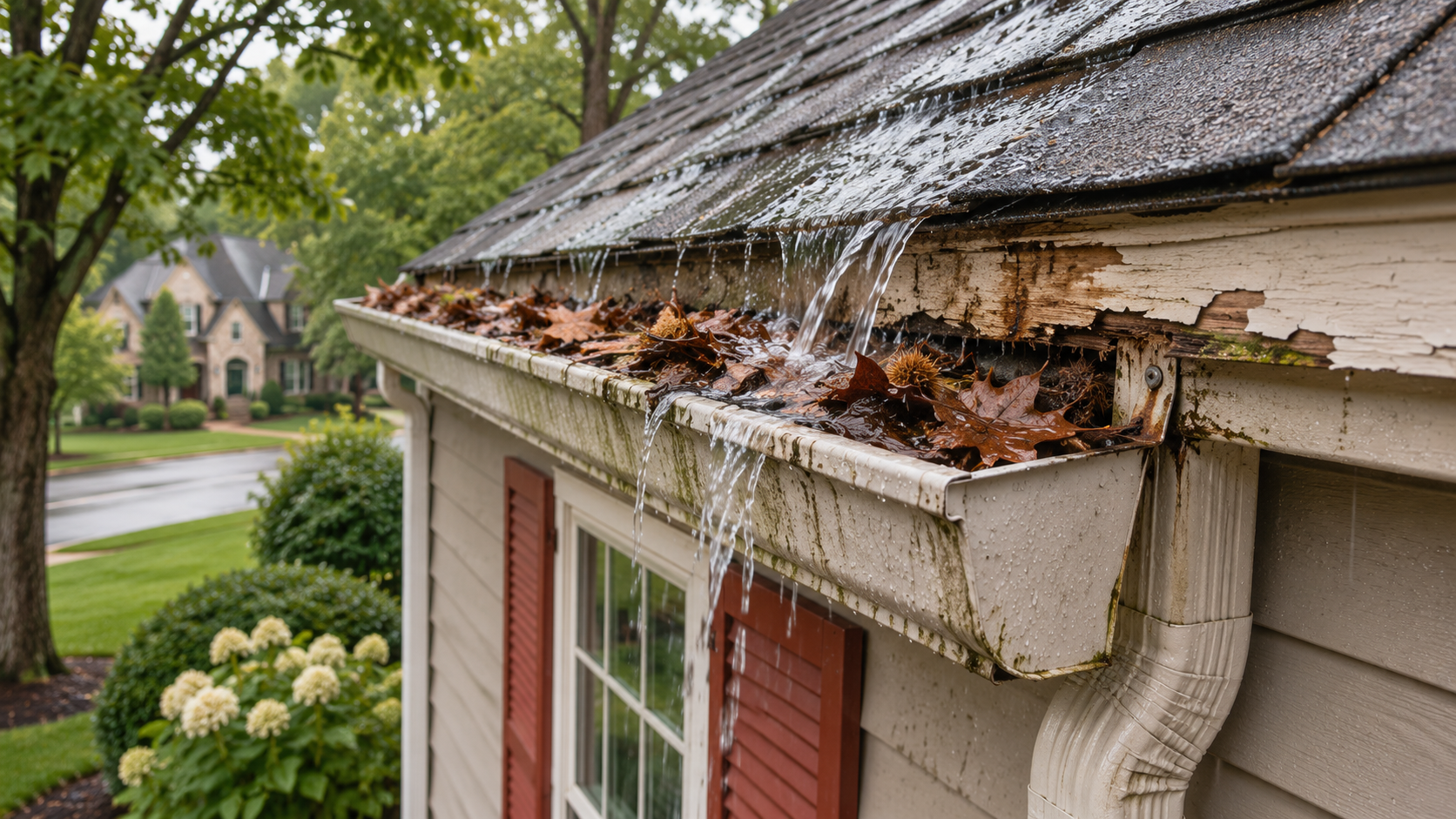
Quick Answer: Yes. When gutters clog, rainwater may spill over the edge, run behind the gutter, or collect near the bottom of the roof. Over time, that water can damage the fascia, soffit, shingles, or roof decking. Spring Hill homeowners shouldn’t ignore overflow that keeps happening, especially on homes with several roof valleys or upper gutters that are hard to see from the ground.
How a Clogged Gutter Can Damage the Roof
When a gutter clogs, the water has to go somewhere.
Leaves, twigs, pine needles, seed pods, and loose roof granules can block the path to the downspout. As the gutter fills, water may pour over the front or leak behind it.
The fascia board runs along the edge of the roof and often supports the gutter. If that wood keeps getting wet, the paint may peel, the board may soften, and the gutter fasteners can start to loosen.
Water may also get behind the drip edge or beneath worn shingles near the eaves. From there, it can reach the roof decking or attic.
The source of a leak isn’t always directly above the stain. Water can travel along wood and roofing materials before it shows up inside the home.
Why Spring Hill Homes May Be at Risk
Many Spring Hill homes have larger roofs, attached garages, dormers, and several roof slopes.
On homes with more complex rooflines, a lot of rainwater may flow toward one short gutter section. A small clog below a roof valley can cause that area to overflow even when the rest of the gutter looks clear.
Upper-story gutters can also hide problems. Debris may sit there for months before the homeowner notices stains, overflow, or water marks near an outside wall.
Homes without many trees can still develop clogs. Windblown debris and loose shingle granules may collect near downspout openings and slow the water down.
Learn more about Red Rover Roofing’s roofing services for Spring Hill homeowners.
Where Gutter Problems Often Start
Roof valleys are a common trouble spot because they carry water from two roof slopes toward one area. If the gutter below is blocked, sagging, or too small, water may shoot past it during a hard rain. The gutter doesn’t need to be packed with debris. A small blockage in a high-flow area may be enough to cause overflow.
Water can also get between the gutter and fascia when the system is loose or no longer sitting in the right position. You may notice dark stains, peeling paint, loose fasteners, or a gutter section leaning away from the house.
The drip edge is meant to guide water into the gutter. When the gutter shifts or overflows, water may run behind that metal edge and reach the wood underneath.
Can Clogged Gutters Cause Roof Edge Rot?
Yes. Clogged gutters can contribute to roof edge rot when rainwater backs up or runs behind the gutter instead of reaching the downspout. The damage usually affects the fascia, soffit, and wood decking near the lower edge of the roof.
What Parts of the Roofline Can Rot
- Fascia. This is often the first area affected because the gutter is usually attached to it. Look for dark stains, peeling paint, cracks, and soft wood. Once the fascia weakens, gutter fasteners may loosen, and the gutter can sag, tilt, or separate from the house.
- Soffit. Water may reach the soffit beneath the roof overhang. A damaged soffit can stain, sag, or develop openings where insects or small animals can get in.
- Roof decking. If moisture moves behind the drip edge or beneath the lower shingles, it can reach the decking. This damage can stay hidden even when the roof looks normal from the ground.
Does One Clog Cause Immediate Rot?
Usually not. Roof edge rot develops after the same area stays wet through several rain events. A small blockage cleared quickly may not cause lasting damage. The risk goes up when the gutter keeps overflowing, or when the roof edge already has exposed wood, loose fasteners, poor gutter slope, or damaged drip edge flashing. Shaded sections may also take longer to dry, especially on properties with heavy tree cover.
Older and Tree-Lined Neighborhoods Nearby
The same edge rot risks show up in Franklin, just north of Spring Hill. Homes near Franklin’s historic core often have porches, additions, steep roof slopes, and detailed rooflines, which create corners where debris settles and water concentrates. Newer communities such as Westhaven, Berry Farms, and Fieldstone Farms may have larger roofs with several connecting slopes, where multiple valleys send heavy water flow into a short gutter run. Mature trees add leaves and smaller debris near gutter corners, downspout openings, and upper-story sections that are hard to see from the ground.
Signs It May Be More Than a Simple Clog
Water pouring over one part of the gutter during rain is the most obvious warning sign.
You may also see standing water after the rain stops, little water coming out of the downspout, stains along the fascia, peeling paint, marks on the siding or brick, or a gutter pulling away from the house.
Inside, watch for damp areas near the attic eaves, stained roof decking, a musty smell, or a ceiling mark near an exterior wall.
These signs don’t always mean the gutter is the only problem. Damaged shingles, flashing, pipe boots, and other roof parts can cause similar leaks. It’s important to check both the gutter and the roof edge before deciding what needs to be repaired.
Can Damage Happen Before Water Leaks Inside?
Yes. The fascia, soffit, drip edge, or lower roof decking may begin to deteriorate before water reaches a ceiling or interior wall.
A sagging gutter or stained soffit may be the first sign that something is wrong. Taking care of the issue early may help prevent a larger repair.
Is Gutter Cleaning Enough?
Cleaning may solve the problem when debris is the only cause.
Once the gutter and downspout are clear, water should move away from the roof without pooling or spilling. Check the system during the next rain to make sure the overflow has stopped.
Red Rover Roofing includes gutter cleaning as part of its roof maintenance service.
If water still spills over, the gutter may not slope correctly toward the downspout, may have a hidden blockage inside the downspout, may be leaking at a corner, or may be too small for the amount of water coming off the roof.
Cleaning also won’t repair fascia, soffit, or decking that’s already damaged.
Does the Home Need Gutter or Roof Repair?
A seamless gutter repair may be enough if the problem is limited to a loose section, poor slope, leaking joint, or damaged run.
A new seamless gutter system may be the better choice when the gutters overflow in several places, are too small for the roof, or can no longer be attached securely. New seamless gutters are formed on-site and planned around the roof shape, valley locations, downspout placement, and drainage needs of the property.
The home may need repair near the roof edge if water has reached the shingles, flashing, drip edge, or decking. If the fascia has rotted, it should be repaired before the gutter is reattached, because gutter hangers need solid wood to hold.
Some homes need both gutter and roof work. Fixing only one side of the problem may allow the damage to return.
How Red Rover Roofing Can Help
Red Rover Roofing is based in Spring Hill and checks the gutter system and roof edge together.
A roofing specialist can take photos, show you what is happening, and explain where the water is likely coming from. You will also learn whether the problem calls for maintenance, gutter repair, new seamless gutters, roof repair, or no immediate work.
Frequently Asked Questions
Schedule a Roof and Gutter Evaluation in Spring Hill, TN
If the same gutter section keeps overflowing, water is running behind the system, or stains are appearing near an outside wall, have the problem checked before it spreads.
Schedule an inspection with Red Rover Roofing to identify whether the issue begins in the gutter, at the roof edge, or elsewhere in the roofing system. You will receive photos, a clear explanation of the findings, and a practical recommendation for the next step.