What Roofing Questions Should I Ask Before My Insurance Adjuster Visits My Brentwood Home After a Storm?
Before the adjuster arrives, ask how the roof will be inspected, what storm date and damage areas are being evaluated, whether every roof slope and exterior component will be documented, and when you will receive the written scope. You should also ask how missed damage can be reviewed later and arrange an independent roofing inspection so the insurance assessment can be compared with the roof’s actual condition.
A storm can pass through Brentwood in less than an hour and leave homeowners with weeks of uncertainty. The roof may look normal from the driveway, yet shingles can have broken seals, hidden hail bruising, creased tabs, damaged ridge caps, or loosened flashing that will not be obvious without a close inspection. When the insurance company schedules an adjuster visit, many homeowners know the appointment matters but are unsure what to ask or how to prepare.
That uncertainty often leads people to focus on one question: “Will insurance replace my roof?” The adjuster usually cannot answer that responsibly before the inspection and coverage review are complete. A better goal is to make sure the inspection is thorough, the known damage is documented, the roof and interior symptoms are connected clearly, and you understand what happens after the visit.
The homeowner does not need to argue the claim or diagnose the roof. What matters is being organized, asking direct questions, and making sure the adjuster has access to the evidence that may affect the scope. In Brentwood, where severe thunderstorms, mature trees, complex rooflines, and expensive interior finishes can make storm losses more complicated, careful preparation can prevent important details from getting lost.
Start With the Question That Defines the Entire Inspection
The first question to ask is, “What specific date of loss and type of storm damage are you inspecting?” This may sound basic, but it establishes exactly what event the claim is tied to and what the adjuster expects to evaluate. If the home experienced hail, straight-line winds, falling limbs, and wind-driven rain during the same storm, those conditions should be described clearly rather than reduced to a vague report that the roof “looked damaged.”
You should also explain when the symptoms first appeared. A ceiling stain that showed up two days after the storm, water entering only during wind from one direction, or shingles discovered in the yard the following morning can all help connect the observed condition to the event. Keep the explanation factual and avoid guessing about damage you cannot see.
Ask whether the adjuster has the original claim report, photographs, emergency mitigation receipts, and any previous inspection documentation you submitted. Claim files can contain multiple uploads, phone notes, and contractor records, and it is reasonable to confirm that the person inspecting the property has access to the relevant information. If the adjuster has not seen something important, provide it again and keep your own copy.
This is especially useful after widespread Brentwood storms when adjusters may be handling many properties across neighborhoods such as Brenthaven, Meadowlake, Raintree Forest, Annandale, and communities off Concord Road or Wilson Pike. A well-organized homeowner makes it easier for the adjuster to understand what happened at that specific home rather than relying on a general impression of the storm.
Ask Whether Every Part of the Roofing System Will Be Evaluated
A roof inspection should not stop at counting missing shingles. Ask whether the adjuster plans to inspect every accessible roof slope, including the ridges, hips, valleys, eaves, rakes, flashing transitions, pipe boots, roof vents, skylights, chimneys, gutters, and downspouts. Storm damage often appears differently across each part of the system, and one roof face may show much stronger evidence than another because of wind direction, tree cover, pitch, and exposure.
Hail damage can also leave useful collateral indicators on softer metals even when shingle damage is harder to identify from the ground. Dented gutters, downspouts, roof vents, flashing, window screens, and other exterior surfaces may help document the path and intensity of the storm. These indicators do not automatically establish that the roof requires replacement, but they should not be ignored during a complete property assessment.
Ask how the adjuster distinguishes functional storm damage from ordinary aging, cosmetic marks, installation defects, and mechanical damage. Older roofs may already have granule loss, brittle shingles, previous repairs, or deteriorated flashing, but age does not mean new storm damage should be dismissed automatically. At the same time, not every mark on a roof came from the most recent storm, which is why careful documentation matters.
Brentwood’s larger custom and executive homes often contain many roof planes, dormers, chimneys, valleys, and steep sections. On homes in areas such as Governors Club, Taramore, and Princeton Hills, a quick view of the most accessible slope may not tell the full story. Asking how the complete roof will be assessed helps clarify whether the inspection reflects the whole system rather than only the easiest sections to reach.
Make Sure Interior Damage Is Connected to the Exterior Inspection
If water entered the home, ask the adjuster to inspect and photograph the affected attic and interior areas rather than documenting only the roof surface. Show them ceiling stains, damp insulation, water trails on rafters, bubbling paint, wet drywall, musty areas, and any damage around light fixtures, chimneys, skylights, or exterior walls. A roof claim can involve more than exterior materials when storm-created openings or damaged components allow water inside.
Homeowners often assume a ceiling stain sits directly beneath the leak, but water can travel along decking, rafters, framing, and insulation before becoming visible. A stain near a fireplace may trace back to chimney flashing several feet away, while water near an exterior wall may have entered around a dormer, sidewall transition, or lifted shingle higher on the roof. The adjuster should understand where the water appeared, when it appeared, and under what weather conditions it becomes active.
Ask whether moisture readings, attic photographs, or additional evaluation are needed to determine the extent of the damage. Insulation can remain wet after the visible dripping stops, and repeated moisture may affect decking or concealed wall cavities. Documenting these conditions early helps separate storm-related water intrusion from deterioration that develops after weeks or months of delay.
Do not paint over stains, discard wet materials, or permanently repair the affected area before it is documented unless immediate action is necessary for safety. Reasonable emergency steps should still be taken to prevent additional damage, but photograph the condition before and after mitigation whenever possible and keep receipts for professional tarping, drying, or temporary repairs.
Ask How the Adjuster Will Document Wind and Hail Damage
A useful question during the visit is, “How are you documenting damage on each roof slope?” Adjusters may photograph representative areas, mark test sections, record missing or creased shingles, and note collateral damage around the property. Understanding the process helps you recognize whether each elevation was evaluated or whether the final decision may be based on a limited set of observations.
For wind claims, ask whether the inspection will account for broken shingle seals, creased tabs, lifted ridge caps, displaced shingles, exposed fasteners, and damage along eaves, rakes, hips, and corners. Wind damage does not always mean shingles are completely missing. A shingle can remain in place after its adhesive seal has failed or its mat has been creased, leaving it more vulnerable to future uplift and wind-driven rain.
For hail claims, ask how the adjuster distinguishes functional shingle damage from ordinary granule loss, blistering, foot traffic, or manufacturing variation. Hail can bruise the asphalt mat beneath the granules, but the damage may not create an immediate leak. That is one reason waiting for water to enter the home is not a reliable way to decide whether a hail-exposed roof should be inspected.
You can also ask whether the adjuster found damage on one slope, several slopes, or only exterior components. Directional storms frequently affect Brentwood homes unevenly. Mature tree canopies may shield one roof plane while falling branches damage another, and west- or south-facing slopes may show different weathering patterns from shaded portions of the roof.
Ask What Happens if the Contractor Finds Damage the Adjuster Missed
The initial adjuster inspection is important, but it is not always the final word on the complete repair scope. Ask what process should be followed if a roofing contractor later identifies damage, materials, or repair requirements that were not included in the original estimate. The answer should explain how supporting photographs, measurements, invoices, or a supplemental scope can be submitted for review.
A supplement is not automatically evidence that someone made a serious mistake. Some conditions are difficult to confirm before tear-off, including deteriorated decking, hidden underlayment damage, flashing that cannot be reused, or additional labor needed to complete the repair properly. Other items may simply have been omitted from the initial estimate and require additional documentation.
Ask whether the claim can be reopened or reconsidered if new storm-related evidence becomes available. It is also reasonable to ask how disagreements about repairability, shingle availability, matching, code-related requirements, or additional roof slopes should be presented. Request claim decisions and scope limitations in writing so you are not left trying to remember a verbal explanation later.
This is where an independent roofing inspection can provide valuable clarity. A contractor should not decide what the insurance policy covers, but they can document the roof’s physical condition, identify the work required to repair it correctly, and explain why the contractor’s scope may differ from the insurance estimate.
Should Your Roofing Contractor Be Present for the Adjuster Visit?
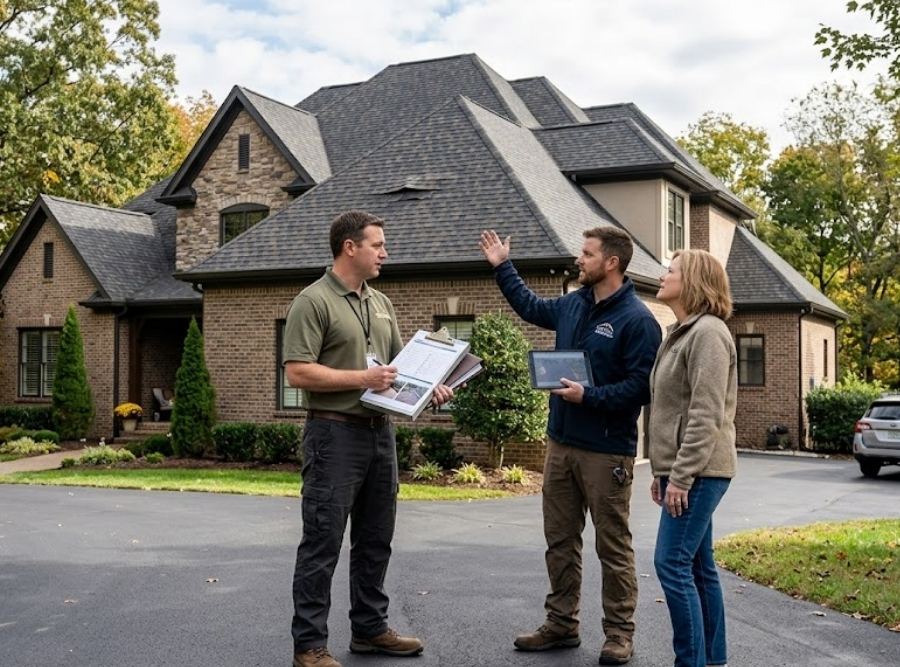
Having a roofing contractor present can be helpful, particularly on steep, complex, older, or heavily storm-exposed roofs. The contractor can point out damage already documented during an independent inspection, explain repairability concerns, identify roof-system components that may be affected, and help ensure the adjuster has access to relevant measurements and photographs.
The contractor’s role should be technical rather than confrontational. A productive meeting is not about pressuring the adjuster to approve a particular outcome. It is about making sure both parties are looking at the same roof conditions and understanding how a proposed repair would actually be performed.
This can be especially valuable when surrounding shingles are brittle, a discontinued product may be involved, flashing would need to be disturbed, or the roof contains complex adjoining planes. An adjuster may prepare an initial repair scope based on visible damage, while the contractor evaluates whether that repair can be completed without breaking surrounding materials or compromising the roof system.
If scheduling both parties together is not practical, have the contractor prepare clear documentation before the adjuster arrives. Photographs should identify the location of each concern rather than showing unmarked close-ups with no roof context. The most useful records connect overview images, individual slopes, detailed conditions, interior symptoms, and the storm date into a coherent explanation.
Do Not Mistake the Adjuster Visit for a Final Roof Estimate
Another important question is, “When will I receive the written estimate and coverage decision?” The field inspection is one stage of the claim, not necessarily the moment when the final scope is approved. The adjuster may need to review photographs, measurements, policy provisions, material pricing, and internal documentation before an estimate is issued.
Once the paperwork arrives, ask for the complete scope rather than relying only on the payment summary. Review which roof slopes, shingles, ridge caps, flashing, vents, gutters, interior repairs, and other components were included. Confirm whether the estimate calls for spot repair, slope replacement, or full replacement, and note any assumptions about reusing existing materials.
The first insurance payment may also be lower than the total replacement cost shown on the estimate because of the deductible and withheld depreciation. Ask how actual cash value, replacement cost value, and recoverable depreciation apply to the claim. These calculations affect payment timing but do not necessarily tell you whether every physically necessary roofing item has been included.
A common homeowner mistake is comparing the first check directly with a contractor’s full replacement estimate and concluding that one of the numbers must be wrong. The better comparison is between the insurance scope and the contractor’s scope. When each line item and roofing component is understood, the reason for any difference becomes much easier to identify.
Preparation Is More Valuable Than Trying to Say the “Right” Thing
Homeowners sometimes worry that one poorly worded answer will ruin the claim. The better approach is to be accurate, organized, and direct rather than rehearsing what you think the adjuster wants to hear. Explain what you observed, when you observed it, and what changed after the storm. Avoid guessing about roof conditions you cannot safely inspect or exaggerating the extent of the damage.
Before the appointment, gather photographs of the exterior and interior, the storm date, records of prior roof work, emergency mitigation receipts, the contractor’s inspection report, and any saved shingles or debris. Make sure the attic and affected rooms are accessible, and identify safe exterior areas where damage can be viewed from the ground. Do not climb onto a wet or storm-damaged roof to collect additional evidence.
You should also write down the adjuster’s name, contact information, claim number, and expected timeline for the next step. Ask when the report will be available, who to contact with additional documentation, and how follow-up questions should be submitted. These simple details reduce confusion if the claim moves through several departments or representatives.
Preparation does not guarantee that insurance will approve a repair or replacement. It does, however, give the inspection a stronger factual foundation and makes it less likely that known damage, interior symptoms, or roof-system concerns will be overlooked.
A Thorough Inspection Gives You Better Questions and Clearer Next Steps
The most valuable thing a homeowner can bring to an adjuster visit is a clear understanding of the roof’s condition before the appointment begins. That does not mean diagnosing hail impacts or deciding what the policy owes. It means knowing where shingles are missing, where leaks appeared, which exterior components were damaged, and whether an experienced roofing contractor found concerns that cannot be seen from the driveway.
Red Rover Roofing can inspect a Brentwood roof before the adjuster visit, document storm-related conditions, and explain whether the visible issues point toward a limited repair or a broader roofing-system problem. We can also compare the contractor scope with the insurance estimate after it arrives and identify roofing components that may need additional documentation.
The goal is not to turn the inspection into an argument. It is to make sure the adjuster receives accurate information, the roof is evaluated thoroughly, and the homeowner understands what happens next. After a Brentwood storm, that clarity can make the difference between reacting to confusing paperwork and making an informed decision about the roof, the claim, and the work the home actually needs.