Can I Get Free Emergency Roof Tarping After a Storm?
Emergency roof tarping is often provided at no upfront cost after a storm, since most insurance policies require reasonable steps to prevent further damage, and tarping is typically treated as part of that mitigation process. The cost is usually rolled into the overall claim settlement rather than paid separately, and coverage applies only when the damage comes from a covered event like wind, hail, or a fallen tree, not age or neglect. Red Rover Roofing provides 24/7 emergency tarping across Williamson, Davidson, and Rutherford counties, and this guide covers how professional tarping works and what to do if a tree is involved.
When Is Emergency Roof Tarping Free?
In many storm situations, emergency roof tarping is provided at no upfront cost because the work is later included as part of the insurance claim process. Most homeowners insurance policies require homeowners to take reasonable steps to prevent additional damage after a covered storm event, and emergency tarping is typically considered part of that mitigation. That doesn’t necessarily mean insurance sends a separate check labeled “tarp reimbursement” — in most cases, the tarping cost is rolled into the overall claim settlement or credited toward the final roofing project. Coverage generally applies when the damage was caused by a covered event like wind, hail, or a falling tree, not age, wear and tear, or neglected maintenance.
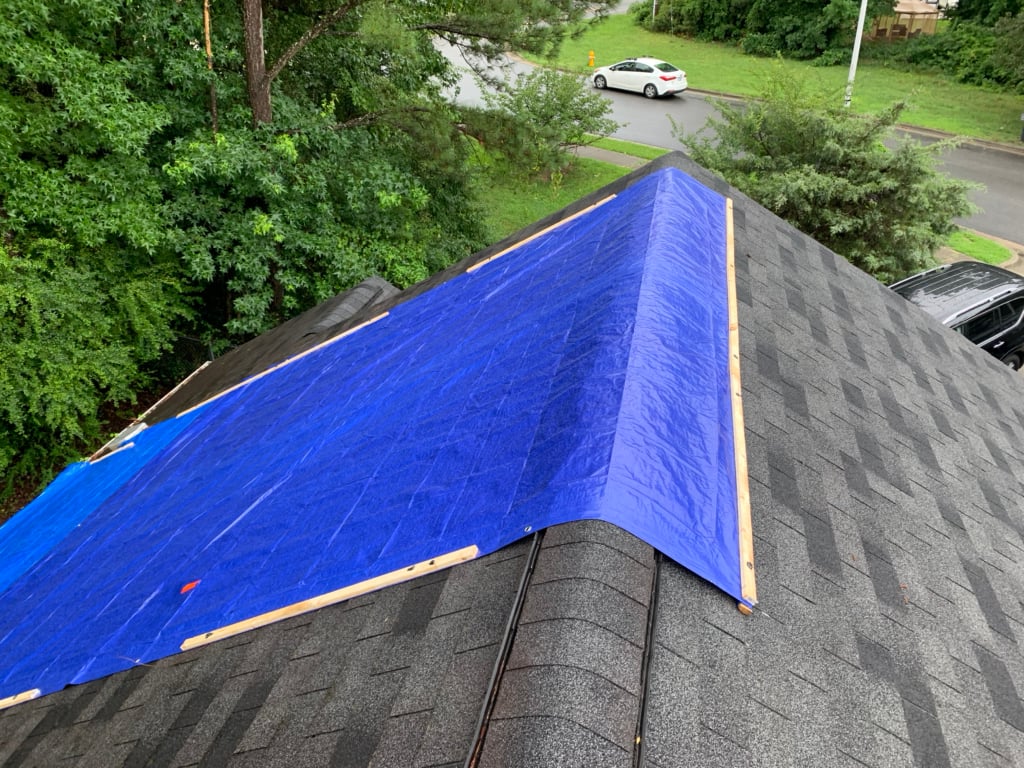
A properly installed emergency tarp uses wooden battens to secure the perimeter and prevent wind uplift.
- Assess safety first.
Stay off the roof, check for visible damage from the ground, and look for water intrusion in ceilings or attic spaces. - Document the damage.
Take photos of interior water stains, attic conditions, and any visible exterior damage before tarping is installed. - Contact a roofing contractor.
A professional can assess the damage and install a tarp properly. - Arrange tree removal if needed.
A fallen tree or limb has to be removed by a tree service before tarping can be installed. - File the insurance claim.
Use your documentation to file, and have your roofer meet with the adjuster to ensure all damage is captured. - Schedule permanent repairs.
Work with your contractor to plan permanent repairs as soon as materials and weather conditions allow.
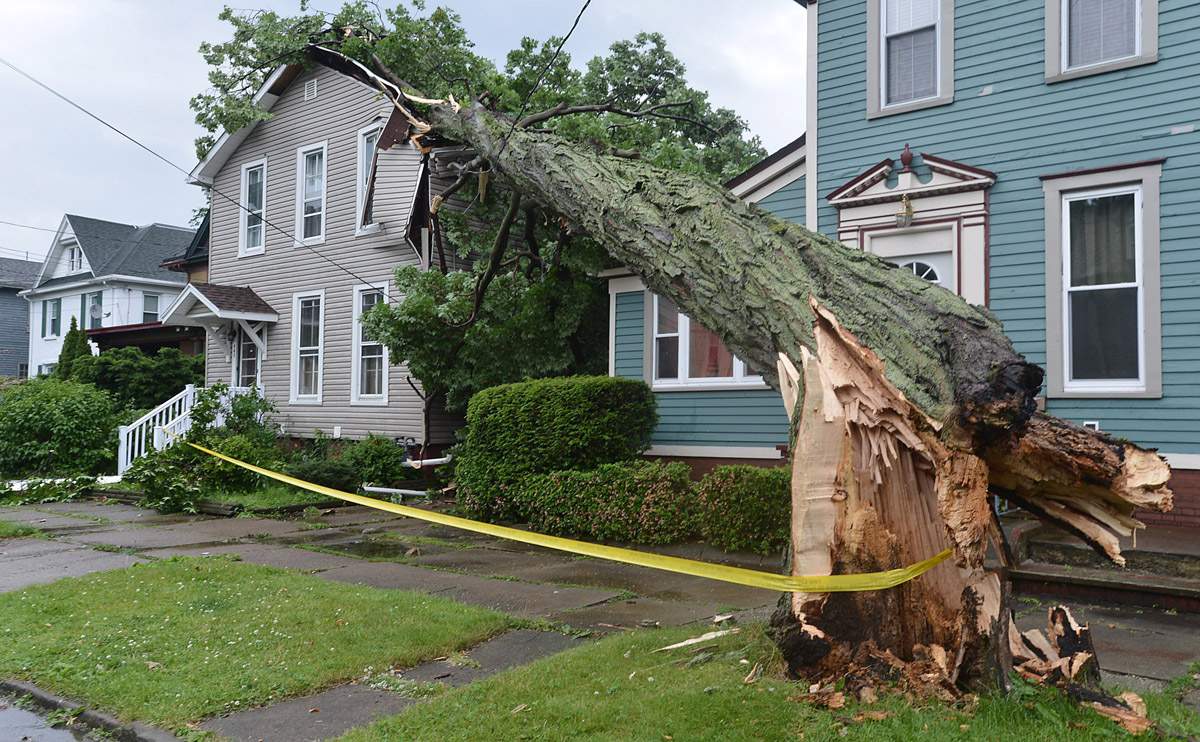
When a tree falls on a roof, it must be removed by a tree service before tarping can be installed.
What Does Professional Emergency Tarping Actually Include?
Professional emergency tarping is very different from simply throwing a blue tarp over a hole.
- Heavy-duty reinforced tarps positioned to extend well past the damaged area so water flows naturally down the roof
- Wooden battens (typically 1×2 or 1×3 boards) fastened around the tarp’s perimeter to hold it in place and reduce wind uplift
- Controlled water drainage paths so the tarp sheds water instead of pooling it
- Temporary leak mitigation inside attic areas if needed
- Photo documentation for insurance records
Wind uplift is one of the biggest reasons DIY tarps fail in Middle Tennessee storms — a poorly secured tarp often tears loose in the next storm, causing additional roof and interior damage. A tarp is a temporary stabilization measure, not a fix, and it will degrade with sun and wind exposure, so it should always be paired with a plan for permanent repairs.
If your roof needs to be stabilized right now, see our Emergency Roof Tarping page for what to expect from a professional response.
Why Does Fast Tarping Matter for an Insurance Claim?
Most insurance carriers expect homeowners to act quickly after storm damage to prevent further water intrusion, and delaying emergency protection can sometimes create disputes about secondary interior damage later. Water spreading through insulation, ceilings, drywall, flooring, and framing can turn a manageable roof repair into a much larger restoration project, and mold growth can begin within 24 to 48 hours in humid conditions. Photos of interior damage, attic conditions, and the roof itself, taken as soon as it’s safe, help establish the cause, timing, and extent of the damage for the claim.
What Should You Do If a Tree Fell on Your Roof?
If a tree or large limb has fallen onto the roof, it has to be removed before tarping can be safely installed. Roofing crews aren’t tree removal specialists, and attempting to tarp over a tree creates safety risks and incomplete protection. Homeowners are typically referred to a qualified tree removal service first, and once the obstruction is cleared and the roof area is accessible, emergency tarping can be installed properly.
What Mistakes Should You Avoid With Emergency Roof Tarping?
- Delaying tarping to save money — water intrusion spreads, increasing repair costs and potentially causing mold or structural damage
- Assuming a tarp means repairs can wait indefinitely — tarps degrade quickly from sun, wind, and weather
- Attempting DIY tarping without proper materials — improperly secured or lightweight tarps blow off or tear quickly
- Not documenting damage before tarping — insurance claims are harder to process without photos showing the original damage
Frequently Asked Questions About Emergency Roof Tarping
Is emergency roof tarping free after a storm?
It’s often provided at no upfront cost, since most insurance policies require homeowners to take reasonable steps to prevent further damage after a covered storm event, and tarping is treated as part of that mitigation. The cost is usually rolled into the overall claim settlement rather than reimbursed separately, and it only applies to damage from a covered event like wind, hail, or a fallen tree.
What does professional emergency roof tarping include?
A professional tarp installation uses heavy-duty reinforced material positioned to extend past the damaged area, secured with wooden battens around the perimeter to reduce wind uplift. It also includes controlled drainage paths, temporary attic leak mitigation if needed, and photo documentation for insurance records. This is a different process from simply laying plastic over a hole.
Can I tarp my own roof after storm damage?
It’s possible, but DIY tarps fail often, mainly due to wind uplift from tarps that aren’t properly battened down or heavy enough for the job. A poorly secured tarp can tear loose in the next storm and cause additional roof and interior damage. Professional tarping is built to withstand ongoing weather until permanent repairs happen.
What happens if a tree fell on my roof before tarping?
A fallen tree or large limb has to be removed by a tree removal service before tarping can be installed, since roofing crews aren’t equipped for tree removal and tarping over a tree creates safety risks. Once the tree is cleared and the roof area is accessible, emergency tarping can proceed normally.
How long can a tarp stay on a roof before permanent repairs are needed?
A tarp is meant as a temporary stabilization measure, not a long-term fix, and it degrades with continued sun, wind, and weather exposure. It should always be paired with a clear plan for permanent repairs as soon as materials and weather conditions allow, rather than treated as an open-ended solution.
Definitions
Emergency tarping
A temporary weatherproofing measure using heavy-duty tarps secured over storm-damaged roof areas to prevent water intrusion until permanent repairs can be made.
Wooden battens
Thin strips of wood (typically 1×2 or 1×3) fastened around the perimeter of a roof tarp to hold it in place and prevent wind from lifting the tarp.
Storm-created opening
A hole or breach in the roof caused by wind, hail, or flying debris during a storm event, qualifying the home for emergency tarping services.
Common Mistakes to Avoid
What to Ask Your Roofer
Middle Tennessee’s severe spring storm season (March-June) produces high winds, hail, and occasional tornado activity. In Williamson County and surrounding areas, emergency tarping is a common first response after overnight storms when homeowners wake up to active leaks or visible roof damage.
Why Middle Tennessee Homeowners Trust Us
Need Professional Roofing Help?
Red Rover Roofing provides expert roofing services throughout Middle Tennessee. Get your free inspection today.