Skylight Services in Greater Nashville
A skylight adds beautiful natural light to a home, but it also creates a roof penetration that requires careful water-management detailing. As a provider of trusted roofing services, Red Rover Roofing evaluates the critical connection between your skylight and the surrounding roof. We are a family-owned and woman-owned business, led by military veteran and retired U.S. Army Logistics and Ordnance Officer Courtney Hostetler. Whether you suspect a leak or need to coordinate skylight details during a broader roofing project, we offer a direct, no-pressure approach to finding the right solution. Call (615) 392-4503 to discuss your roof with our team.
Request Your Free Roof Consultation
What Causes Leaks Around a Skylight?
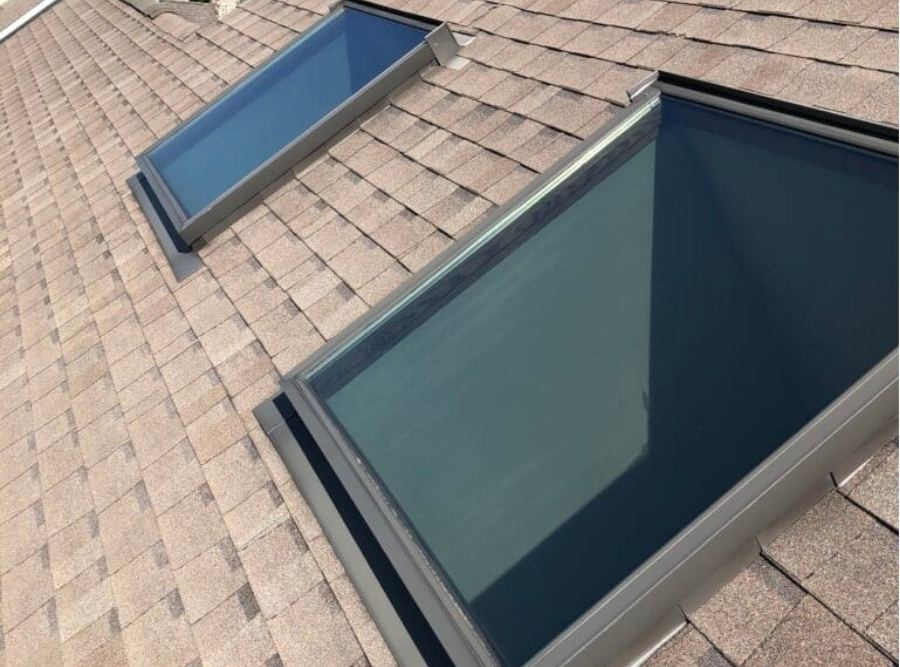
Any penetration in your roofing system is a potential vulnerability. Leaks near a skylight can have multiple causes. In some cases, the surrounding roofing materials or the metal flashing connecting the skylight to the roof deck have degraded or were improperly installed. In other situations, the source may involve the skylight unit itself rather than the surrounding roofing. Because water can travel before becoming visible inside the home, it is important to evaluate the observable conditions around the entire area rather than assuming the flashing has failed.
How Do We Evaluate the Roof Around a Skylight?
Accurate recommendations begin with a thorough evaluation of the existing conditions. We provide free drone-assisted roof inspections to safely examine the roof surface. Our team, which includes owner and certified inspector Alex Hostetler, looks closely at the surrounding roofing materials, the condition of the flashing, and the observable exterior conditions of the skylight unit. By assessing these components together, we can determine whether the issue appears to be related to the roof integration or the skylight itself before recommending permanent roofing work. If you need a baseline condition report for the entire house rather than a specific leak diagnosis, we can also perform an objective whole-roof inspection.
Skylight Installation and Repair Service Areas
Red Rover Roofing Serves Middle Tennessee.
Serving homeowners across Williamson, Davidson, Rutherford, Maury counties and beyond.
Antioch, TN
Arrington, TN
Belle Meade, TN
Christiana, TN
College Grove, TN
Columbia, TN
Fairview, TN
Forest Hills, TN
Gallatin, TN
Goodlettsville, TN
Hendersonville, TN
La Vergne, TN
Lewisburg, TN
Mount Juliet, TN
Murfreesboro, TN
Nolensville, TN
Shelbyville, TN
Smyrna, TN
Thompson’s Station, TN
White House, TN
Don’t see your area? We constantly expand our service area to better serve homeowners in Middle Tennessee.
Can a Skylight Be Addressed During Roof Repair?
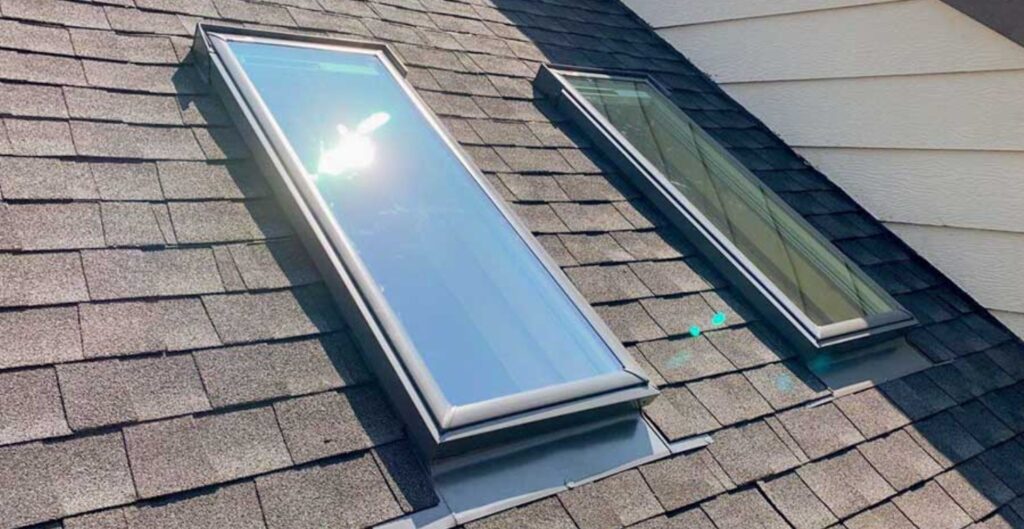
If our evaluation confirms that the skylight unit is in good condition but the surrounding roof integration has failed, the problem can often be solved without replacing the entire roof. When the issue is isolated to the roofing around the skylight, we can determine whether a targeted roof repair is appropriate based on the observed conditions. However, if the water intrusion is actually originating from higher up on the roof and simply traveling down to the skylight opening, we will route the project toward a broader corrective repair to fix the true source of the leak.
What Happens to Skylights During Roof Replacement?
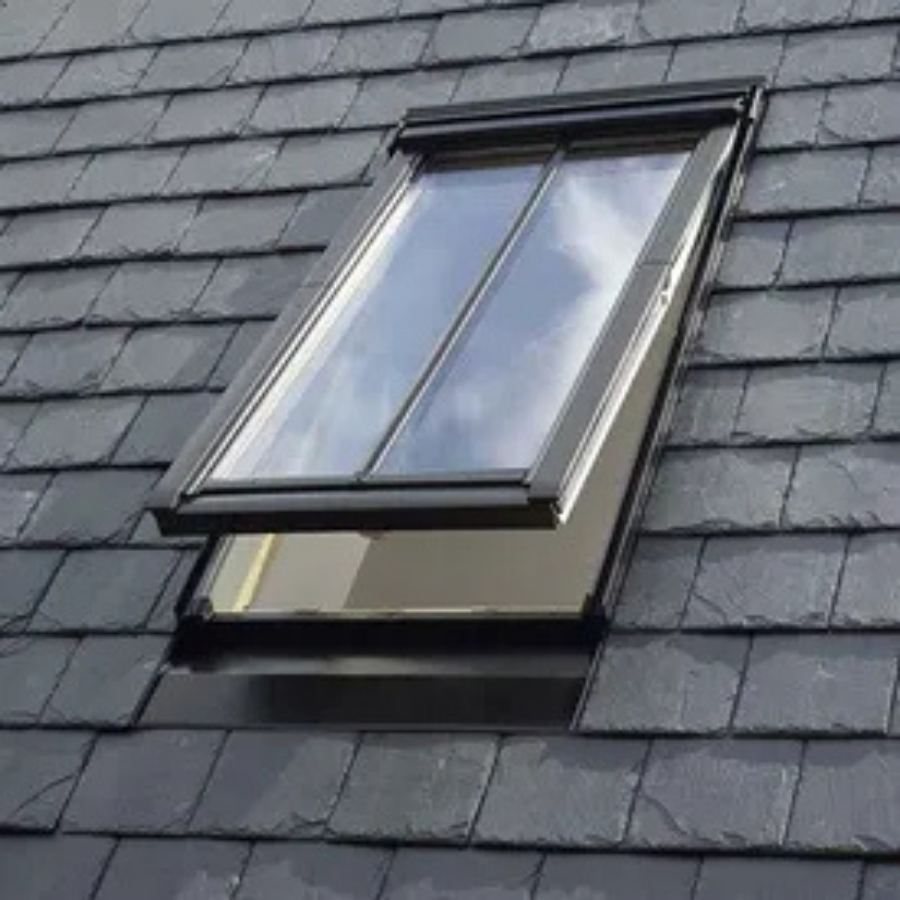
A full roof replacement is the ideal time to evaluate all existing roof penetrations, including your skylights. During roof replacement, the surrounding roofing materials are addressed as part of the new roof assembly. We evaluate the existing skylight integration and coordinate the applicable roofing and flashing details with the replacement system. Our team brings over 10 years of industry experience to these projects, and we have completed over 1,000 projects with 30+ 5-star reviews. We also handle all local permitting for applicable roofing projects. If you are building a new home or addition, our roof installation team will coordinate the roofing work around any newly framed skylight openings. For highly complex whole-roof assembly planning, we offer dedicated roof system design and evaluation.
When Does a Skylight Need More Than a Roofing Repair?
Sometimes the observable conditions indicate that the roofing around the skylight may not be the only issue. If the skylight unit itself appears damaged or compromised, roofing work alone may not resolve the problem. We explain what we can observe from the roofing side so you can determine the appropriate next step for the skylight unit.
Why Choose Red Rover Roofing for Skylight Roofing Services?
Skylight-related roofing issues require careful attention because the source of a leak is not always where the water becomes visible. At Red Rover Roofing, we evaluate the surrounding roofing materials, flashing, and roof penetrations to identify potential problems before recommending repairs. With over 10 years of industry experience and more than 1,000 completed projects, our team provides practical roofing solutions based on observable conditions.
As a family-owned and woman-owned roofing company serving Greater Nashville, we believe in straightforward communication and recommendations without unnecessary pressure. Whether your skylight needs attention during a roof repair or you’re planning a complete roof replacement, we help ensure the surrounding roofing system receives the attention it deserves.
Red Rover Roofing Services
Roofing
Specialty & Gutters
Storm & Insurance
Skylight Services FAQs
How can I tell whether my skylight or the roof around it is leaking?
It is very difficult to diagnose the exact source of a leak from the inside of your home. A professional evaluation is usually required to check the exterior flashing, the condition of the surrounding roofing materials, and the seals on the skylight unit itself.
Can Red Rover repair flashing around an existing skylight?
Yes. When the observed issue is isolated to the roofing or flashing around an existing skylight, we can evaluate whether a targeted roofing repair is appropriate.
Does a leaking skylight always need to be replaced?
No. A leak near a skylight can originate from the surrounding roofing, flashing, the skylight unit, or another area of the roof. We evaluate the observable roofing conditions before recommending roofing work.
What happens to my skylight when I replace my roof?
During a roof replacement, we evaluate how the existing skylight integrates with the surrounding roof and coordinate the applicable roofing and flashing details with the new roof assembly. If the skylight itself appears compromised, we explain the observable conditions so the appropriate next step can be determined.
Can you inspect a skylight before recommending roofing work?
Yes. We use free drone-assisted inspections to evaluate the observable conditions of your roof and skylight integration. We want to ensure that any roofing work we recommend actually addresses the root cause of the issue.
Can roof damage around a skylight be repaired without replacing the whole roof?
In many cases, yes. As long as the broader roofing system is still in good condition, localized damage around a roof penetration can be addressed through an isolated roof repair. We evaluate the overall roof condition before recommending the appropriate scope of work.
TN #12890 | ★★★★★ | BBB Accredited A− | NRCA Member | Nashville Chamber