Learn when emergency roof tarping is free after a storm, how professional tarps are installed, and what to do if tree damage is involved. Complete Middle Tennessee storm damage guide.
Step-by-Step Guide
Assess safety first
Stay off the roof. Check for visible damage from the ground and look for water intrusion in ceilings or attic spaces.
Document the damage
Take photos of interior water stains, attic conditions, and any visible exterior damage before tarping is installed.
Contact a roofing contractor
Call a professional for emergency tarping. They can assess the damage and install a tarp properly.
Arrange tree removal if needed
If a tree or limb is on the roof, contact a tree removal service before tarping can be installed.
File insurance claim
Use your documentation to file a claim. Have your roofer meet with the adjuster to ensure all damage is captured.
Schedule permanent repairs
Work with your contractor to plan permanent repairs as soon as materials and weather conditions allow.
Key Takeaways
Emergency roof tarping is used when wind, hail, or flying debris creates an opening that allows water into the home. The goal is to stabilize the situation quickly by covering the damaged area and shedding water away from the structure. This is most common after severe thunderstorms or tornado activity, when immediate repairs are not yet possible.
A properly installed tarp helps protect drywall, insulation, framing, and personal belongings from further damage. It also gives homeowners breathing room to assess the roof safely and work through next steps. In storm-prone regions like Middle Tennessee, tarping is often the first line of defense after overnight or weekend storms when full repairs cannot happen immediately.
Professional tarping is not just laying plastic over a hole. A heavy-duty tarp is positioned to extend well past the damaged area so water can flow naturally down the roof. Wooden battens, typically one-by-two or one-by-three boards, are then fastened around the perimeter of the tarp to hold it in place and reduce wind uplift.
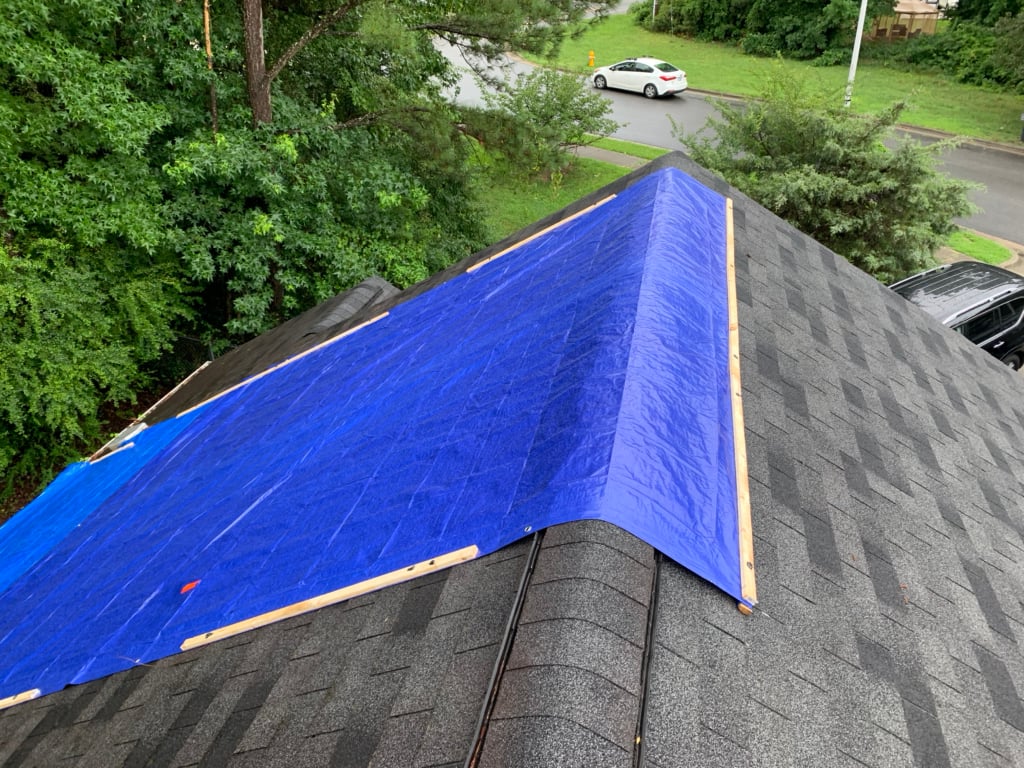
A properly installed emergency tarp uses wooden battens to secure the perimeter and prevent wind uplift.
This method helps the tarp stay secure during additional rain or gusty conditions. The fastening pattern matters, as does how the tarp is folded and tensioned. When installed correctly, tarping can remain effective for a short period without causing additional roof damage, buying time until permanent repairs are completed.
A tarp is a temporary protective measure, not a fix. It does not restore the roof’s structural integrity, and it is not designed to last long-term. Sun exposure, wind, and ongoing weather will eventually degrade even the best-installed tarp.
Tarping should always be paired with a clear plan for permanent repairs. Homeowners should treat it as an emergency stabilization step and work with a roofing contractor to determine repair scope, materials, and timing as soon as conditions allow.
One important limitation is tree-related damage. If a tree or large limb has fallen onto the roof, it must be removed before tarping can be safely installed. Roofing crews are not tree removal specialists, and attempting to tarp over a tree creates safety risks and incomplete protection.
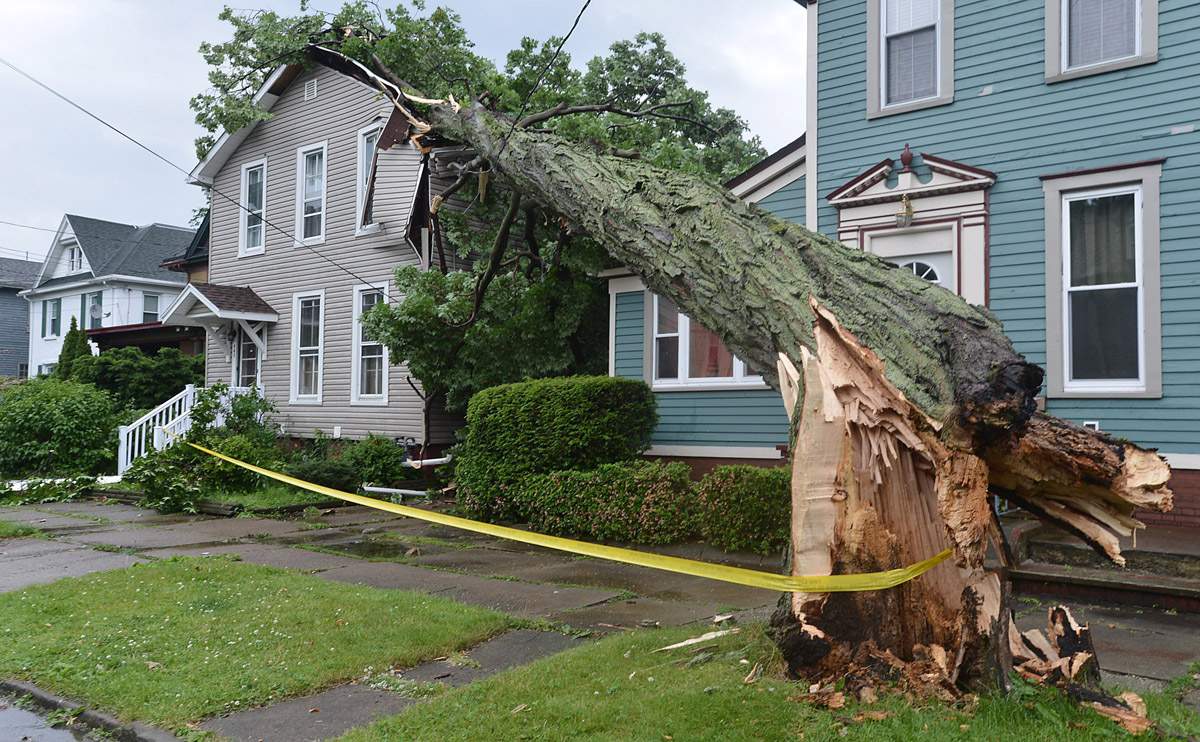
When a tree falls on a roof, it must be removed by a tree service before tarping can be installed.
In these cases, homeowners are typically referred to qualified tree removal services first. Once the obstruction is cleared and the roof area is accessible, emergency tarping can be installed properly. This sequence protects both the home and the workers involved.
When roof tarping is related to an insurance claim, documentation is critical. Homeowners should take photos of interior damage, attic conditions, and the roof itself as soon as it is safe to do so. These images help establish the cause, timing, and extent of the damage. For a complete walkthrough of the claims process, see our guide on filing a roof insurance claim in Tennessee.
Having an experienced roofing contractor assist with documentation and meet with the insurance adjuster can make a meaningful difference. Clear photos, organized records, and accurate descriptions help ensure the scope of work reflects the true damage. This is especially important in areas like Williamson County, where storm activity has become more frequent and claims volume can be high.
Many homeowners assume tarping is optional or cosmetic. In reality, delaying temporary weatherproofing can significantly increase repair costs by allowing water intrusion to spread. Another common misunderstanding is thinking a tarp means repairs can wait indefinitely, which often leads to more damage once the tarp fails.
Professional tarping balances speed, safety, and proper installation. It is meant to stabilize the home, protect evidence for insurance, and set the stage for permanent repairs without introducing new problems.
Emergency roof tarping is often available at no cost after a storm when there is a sudden roof opening and active water intrusion. It is a short-term protective measure designed to limit further damage, not a permanent solution. Proper installation, clear documentation, and a timely repair plan are what turn a stressful storm event into a manageable recovery.
Definitions
Emergency tarping
A temporary weatherproofing measure using heavy-duty tarps secured over storm-damaged roof areas to prevent water intrusion until permanent repairs can be made.
Wooden battens
Thin strips of wood (typically 1×2 or 1×3) fastened around the perimeter of a roof tarp to hold it in place and prevent wind from lifting the tarp.
Storm-created opening
A hole or breach in the roof caused by wind, hail, or flying debris during a storm event, qualifying the home for emergency tarping services.
Common Mistakes to Avoid
What to Ask Your Roofer
Middle Tennessee’s severe spring storm season (March-June) produces high winds, hail, and occasional tornado activity. In Williamson County and surrounding areas, emergency tarping is a common first response after overnight storms when homeowners wake up to active leaks or visible roof damage.
Why Middle Tennessee Homeowners Trust Us
Need Professional Roofing Help?
Red Rover Roofing provides expert roofing services throughout Middle Tennessee. Get your free inspection today.